In This Article
Atlantic Canada doesn't get nearly enough credit as a motorcycle destination. Most touring content focuses on the Rockies, Route 66, or the Pacific Coast. Meanwhile, out here in the east, we've got winding coastal roads, almost zero traffic, fresh seafood every 50 km, and scenery that rivals anything in North America.
This isn't a list of roads I read about on TripAdvisor. These are roads that earn their reputation, routes that deliver, and areas worth riding again. No filler. No generic suggestions. Just the real list.
9 Best Motorcycle Roads in Atlantic Canada (Local's Guide)
New Brunswick
Fundy Trail Parkway — the best road in the province
If you only ride one road in New Brunswick, make it this one. The Fundy Trail Parkway runs along the Bay of Fundy with cliffs, suspension bridges, and ocean views that genuinely stop you in your tracks. The road itself is smooth, flowing, and almost entirely free of truck traffic.
Best paired with a stop at Big Salmon River. The suspension footbridge and beach at the bottom of the trail are worth the walk down.
Route 114 — Hopewell Rocks Loop
Route 114 through the Fundy region is one of the most underrated motorcycle roads on the east coast. The road winds through Fundy National Park and down to Hopewell Rocks — home to the highest tides in the world. The pavement is excellent, the corners are satisfying without being aggressive, and the views of the Bay of Fundy are constant.
Plan your timing around the tides. Riding down to Hopewell Rocks and walking on the ocean floor at low tide is a genuinely surreal experience.
Acadian Coastal Drive — Route 11 North
Head north from Moncton on Route 11 and the world gets quieter fast. The Acadian Coastal Drive runs along the Northumberland Strait and eventually up through Kouchibouguac National Park. Long, flat, open stretches — not technical riding, but incredibly relaxing and ideal for covering distance without stress.
Nova Scotia
Cabot Trail — Cape Breton Island
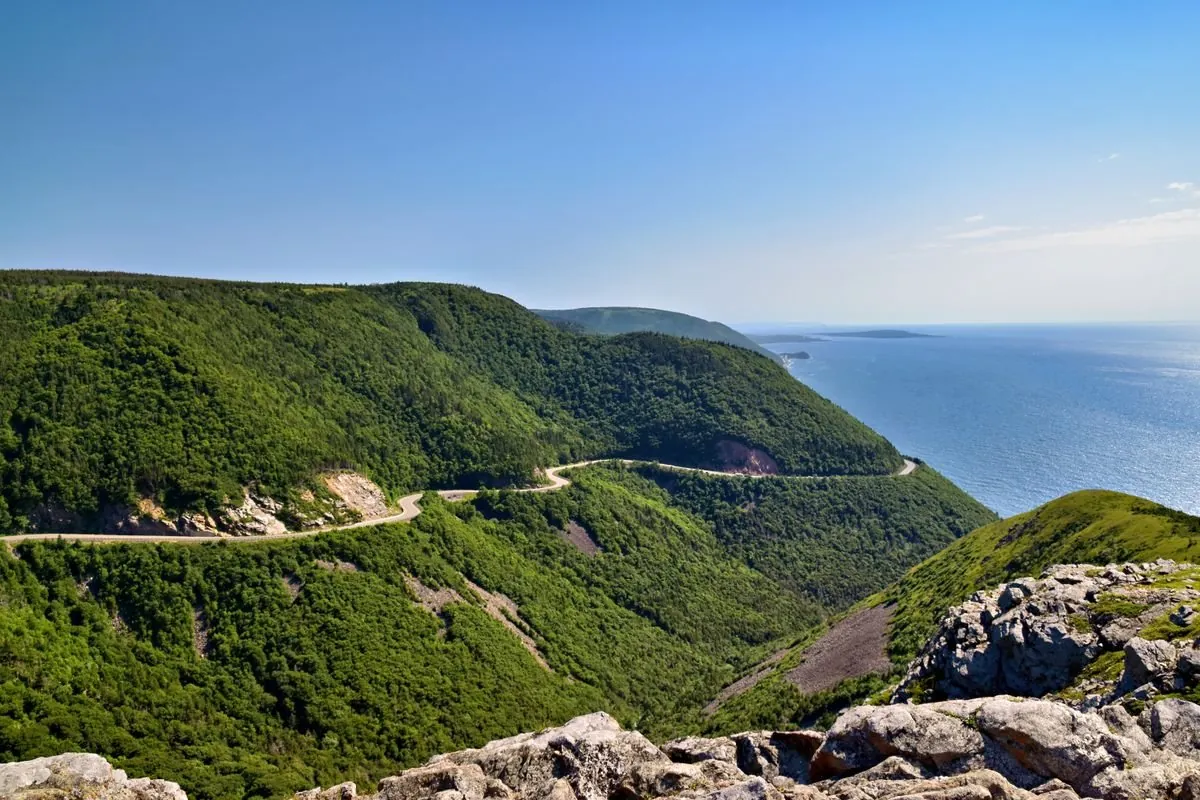
This is the one everyone talks about, and the reputation is earned. The Cabot Trail on Cape Breton Island is 300 km of continuous mountain, ocean, and coastal riding. The north end — between Cheticamp and Cape North — is the peak of the route. The road climbs, drops, twists, and opens up into views that feel cinematic.
Ride it counter-clockwise so you have the cliff side on your left and better sightlines through the mountain sections. Go early in the day to beat tourist traffic and RVs on the tight sections. For more, check out planning a rally trip like Sturgis.
Lighthouse Route — South Shore
Highway 3 along Nova Scotia's South Shore is everything Atlantic Canada is supposed to look like — fishing villages, wooden wharves, fog rolling in off the Atlantic, and lighthouses every 30 km. Lunenburg, Mahone Bay, and Chester are all worth stopping for.
This isn't the fastest road but it's one of the most characterful. Plan for a full day and stop often. For more, check out whether electric touring is viable here.
Prince Edward Island
North Shore — Route 6
PEI's North Shore is the island at its best. Route 6 runs along the coast with red sand beaches, dune grass, and PEI National Park on one side and the Gulf of St. Lawrence on the other. It's flowing, well-paved, and almost traffic-free outside of July and August. For more, see gravel road adventures in New Brunswick.
Stop at Cavendish, North Rustico, and Covehead. Richard's Fresh Seafood in Covehead is mandatory.
Eastern Kings — Route 16 to East Point
Eastern PEI is criminally underrated. Route 16 through Souris, Elmira, and out to East Point Lighthouse passes through quiet fishing communities with almost no tourist traffic. The roads are smooth, the pace is relaxed, and Basin Head Provincial Park — the "Singing Sands" beach — is a perfect rest stop.
Newfoundland
Viking Trail — Route 430
The Viking Trail runs up the western coast of Newfoundland from Deer Lake to L'Anse aux Meadows. It passes through Gros Morne National Park — one of the most dramatic landscapes in Canada — with fjords, table mountains, and coastal barrens that look like nothing else in the country.
Getting here requires the Marine Atlantic ferry from North Sydney, NS to Port aux Basques. Book early, especially for summer. The ferry crossing itself is part of the experience.
Practical Notes for Atlantic Canada Touring
- Fuel stops: Small towns can be 60–80 km apart in rural NB and NL. Always fuel when you see a station, not when you need one.
- Weather: Atlantic Canada weather changes fast. A sunny morning can turn into cold rain by afternoon. Always carry gear for both.
- Moose: Newfoundland and northern NB are serious moose country. Never ride at dawn or dusk without your full attention on the road edges. This is not an exaggeration.
- Ferry timing: The Confederation Bridge to PEI is free eastbound, $52 westbound (as of 2026). Marine Atlantic to Newfoundland requires advance booking in summer.
- Season: June and September are the sweet spots — good weather, minimal tourist traffic, and the roads to yourself.
If you ride Atlantic Canada and think it's anything less than world-class, you went the wrong way on the wrong road. Come back and do it properly — it's worth it.
Frequently Asked Questions
What is the most scenic motorcycle road in Atlantic Canada?
The Cabot Trail in Cape Breton, Nova Scotia is widely considered one of the top 10 motorcycle roads in the world. The combination of ocean cliff roads, highland terrain, and sweeping curves makes it unmissable.
Are the roads good for motorcycles in Atlantic Canada?
Generally yes — road quality is solid on major routes. Watch for frost heave damage in spring, especially in New Brunswick and Newfoundland on secondary roads.
What should I pack for an Atlantic Canada motorcycle tour?
Waterproof gear is essential — Atlantic weather is unpredictable. Pack light, use dry bags, and always have a rain layer accessible. A tire repair kit and basic tools are worth their weight.