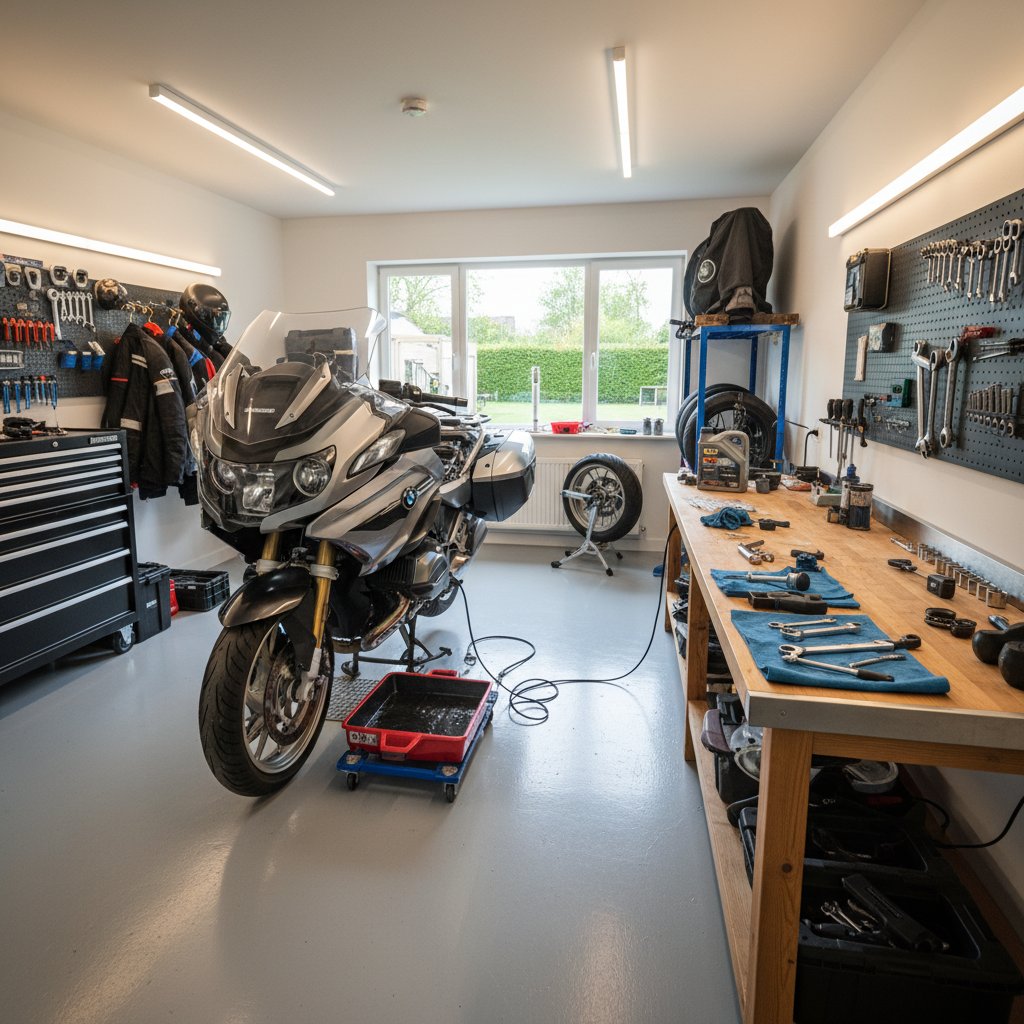
Spring in New Brunswick means the salt is mostly off the roads, the temperatures are climbing, and the Indian Pursuit has been sitting in the garage for five or six months. Every year I do a proper walkthrough before I put it back on the road — not because I expect problems, but because finding something on a quiet Saturday morning beats finding it at highway speed on the way to Amherst.
This is the actual checklist I run through on my Pursuit with the PowerPlus 108ci, Stage 1 exhaust, and Stage 1 air cleaner. Some of this is universal, some of it is specific to the Pursuit's quirks. Either way, it takes a few hours and saves a lot of headaches.
The battery is always step one. If you used a battery tender over winter you're probably fine, but I still check voltage before anything else. The PowerPlus 108ci is a big engine and it needs a healthy battery to crank properly — a marginal battery that starts fine in the garage will leave you stranded in the cold.
Target: 12.6V or higher at rest. Anything below 12.4V, I put it on the tender for another 24 hours before riding. Below 12.0V and I'm evaluating whether the battery needs replacement.
Oil is the big one. If you did an oil change before storage, you're technically fine — but I do one in the spring anyway. Six months sitting means moisture can work its way into the oil, and fresh oil going into the first ride of the season is cheap insurance for an engine that cost a lot of money.
Coolant level, brake fluid, and clutch fluid are visual checks that take two minutes. The Pursuit's coolant reservoir is easy to see — just confirm it's between the min and max lines. Brake fluid should be clear to slightly yellow. Dark brown brake fluid is overdue for a flush.
Tire pressure drops over winter — figure on losing 1–2 PSI per month in an unheated garage. The Pursuit takes 36 PSI front and rear (check your door sticker — this varies by load and year). More importantly, inspect the contact patch for flat spots from sitting, and scan the sidewalls for cracking. Atlantic Canada winters are hard on rubber even in storage.
Also check your wheel spokes and rim edges for any corrosion. A winter's worth of garage condensation can start surface rust on chrome rims faster than you'd expect.
Brake rotors can develop light surface rust after a winter of sitting — completely normal, it'll wear off in the first few stops. What you're actually checking for is caliper function (make sure the pads aren't stuck to the rotor) and pad thickness. If you're under 3mm of pad material going into the season, swap them now rather than mid-tour.
On the Pursuit, I also squeeze both brake levers a few times before moving the bike to make sure the calipers are moving freely. If either lever feels mushy or goes to the bar, stop — there's air in the system or the master cylinder needs attention.
Boot up Ride Command and confirm the 7-inch screen comes on cleanly with no error codes. Check Bluetooth connectivity with your phone, confirm the GPS maps are updated (Indian pushes updates periodically through the system), and test both speakers.
Also check your heated grips, heated seat if equipped, and any auxiliary lighting. These are the things you'll curse yourself for not checking when you're 200 km from home in the rain.
Any accessory that was installed before winter should get a quick inspection. On my Pursuit: the Stage 1 exhaust header connections, the mid-rise handlebar clamp bolts, the Quad Lock mount, and the AliExpress flare wings. Vibration over a season of riding can loosen things, and the freeze-thaw cycles of a Canadian winter don't help.
Torque spec the critical stuff with a proper torque wrench — handlebar clamps especially. A bolt that vibrated loose last fall may be barely hanging on now.
Once everything checks out, the first ride should be a short one. Not because the bike isn't ready — it is — but because you need to warm everything up properly, scrub the tires in (fresh rubber is slippery until the mold release compounds wear off the contact patch), and let the brakes clear any surface rust with a few firm stops in a parking lot.
First ride: 20–30 minutes, familiar roads, easy pace. Second ride: start planning the real trips.
If you want to document the first ride of the season, the Insta360 X5 is what I use for the best no-edit 360 footage on the Indian Pursuit.
Check Price on Amazon.ca → | Amazon.comAs an Amazon Associate I earn from qualifying purchases.