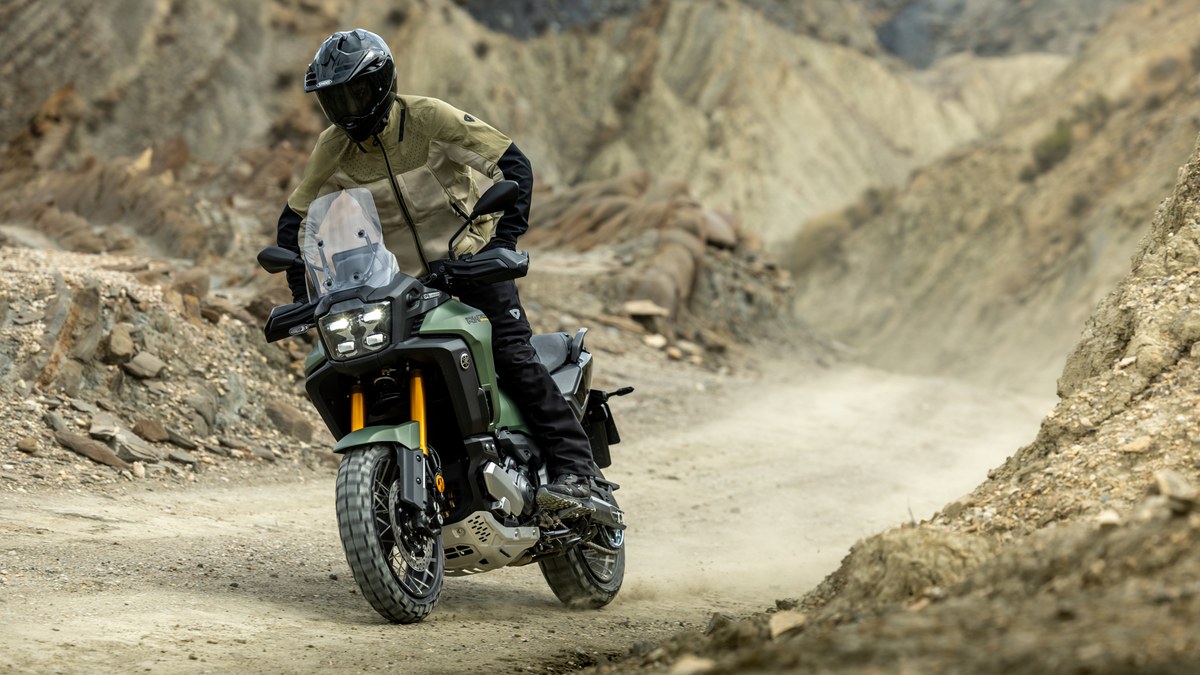
Image: Property of Yamaha Motor Co., Ltd.
Yamaha RW700 Adventure Scooter: 689cc CP2 and Y-AMT for 2027
In This Article
Yamaha put the 689cc CP2 engine into a scooter, gave it 170 mm of ground clearance and cross-spoke wheels, and called it an adventure scooter. Here is what the release actually specifies, and the three numbers that decide whether it tours.
What the RW700 actually is
Yamaha announced a new model family on November 4, 2026, and it is not a motorcycle with a scooter badge bolted on. The RW series is Yamaha's attempt to build a scooter that is genuinely useful off pavement, and the RW700 is the flagship of the pair, joined by the smaller RW350. Both are on display at EICMA 2026 in Milan.
The naming is the first clue to how Yamaha thinks about this. RW stands for a new global series rather than an extension of the TMAX or XMAX line, which tells you Yamaha is not trying to sell a faster commuter. The stated aim is mobility that connects everyday riding with the unusual: comfort in traffic, but with the geometry and the tyres to take a wrong turn onto gravel and keep going. Kando is the word in the release, which is Yamaha's usual shorthand for the feeling of encountering something exceptional.
That is marketing language, so here is the mechanical version. The RW700 is a step-through scooter with a 689cc parallel twin, 170 mm of ground clearance, a 41 mm inverted fork, cross-spoke wheels and Pirelli Scorpion Rally STR tyres. Read those five items together and it is a very specific proposition: the engine out of Yamaha's middleweight motorcycles, in a chassis dimensioned like a light adventure bike, wrapped in scooter bodywork with no clutch lever.
Every specification in this article comes from Yamaha Motor's own news release dated November 4, 2026. Yamaha has not published prices, kerb weights or a Canadian arrival date for the RW series.
The CP2 engine and the scooter-specific Y-AMT
The RW700 uses the CP2, Yamaha's 689cc liquid-cooled, four-stroke, DOHC, eight-valve, fuel-injected parallel twin. It is the engine that has powered the MT-07 and the Tenere 700, and it is the single strongest argument for this scooter: it makes torque low and broadly, and it has a reputation for being one of the most agreeable middleweight engines on sale.
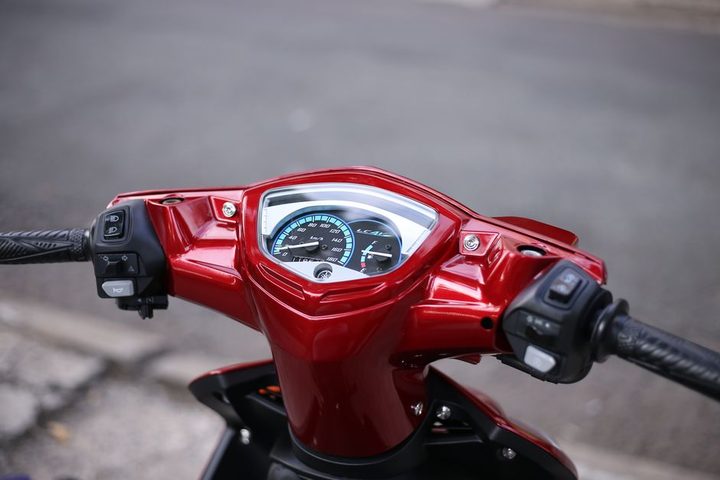
The transmission is the interesting part. Yamaha's Y-AMT has appeared on motorcycles already, but this is the first version developed specifically for a scooter. It gives the rider two modes. AT is fully automatic. MT lets you shift manually from handlebar-mounted controls, with no clutch lever and no gearshift pedal anywhere on the machine.
Yamaha has also integrated the shift and rear brake controls into the handlebars. On an adventure bike that sounds like an odd choice until you think about low-speed work on loose ground, where a foot brake and a foot shifter force you to commit weight to one side. Keeping both functions on the bars is what lets a rider keep their feet planted and their legs gripping the bodywork.
For a touring rider, the AT mode is the real draw. A 400 km day on a scooter automatic, with the CP2's torque doing the work, is a different kind of tiring than the same day on a manual. Whether that is better or worse is a preference. What is not a preference is that no other scooter in this class pairs a 689cc twin with an automated manual that also offers manual shifting.
Chassis, clearance and wheels
The frame is a newly designed backbone type in high-tensile steel tube, and Yamaha's stated goal was to position the engine and the seat lower down. The result is 170 mm of minimum ground clearance, which is adventure-bike territory rather than scooter territory, and handling described as stable with good road follow.
Suspension is a 41 mm inverted front fork and a bottom-link rear monoshock, both long stroke. That is a serious fork for a scooter, and inverted tubes at that diameter are what you fit when you expect to hit things.
The wheels are Yamaha's first cross-spoke design, on lightweight aluminium rims. Cross-spoke wheels matter on unpaved roads because the spokes run to the rim edge rather than through the centre, which lets the wheel flex slightly and absorb impacts instead of transmitting them. They also allow tubeless tyres, and the RW700 runs tubeless Pirelli Scorpion Rally STR, a tyre with a genuine off-pavement reputation rather than a cosmetic block pattern.
Two details show the design was thought through rather than styled. The footrests are Yamaha's first four-position adjustable pegs, and there are foldable footboards. Adjustable pegs let a tall rider open the hip angle, which is the difference between a scooter that fits and one that does not. Foldable boards mean the floor does not catch when you put a foot down on uneven ground.
Electronics and the GRAVEL mode
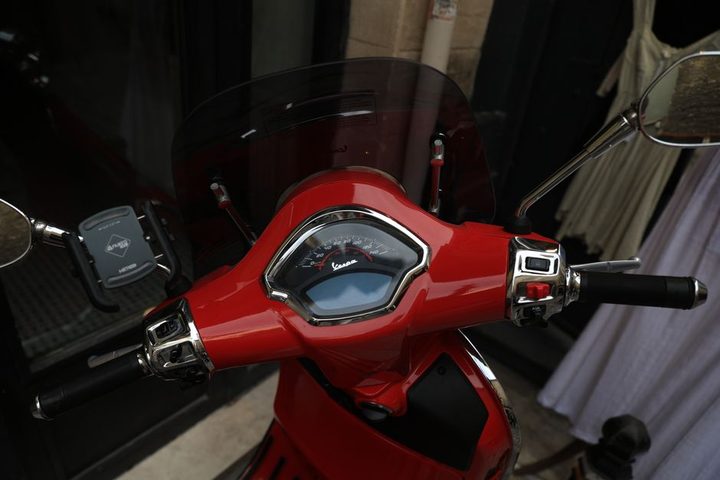
Yamaha Ride Control gives selectable modes matched to surface conditions, which is now standard fare. What is new is GRAVEL mode, which includes GRAVEL SHIFT, a control mapped specifically for unpaved riding. Yamaha does not detail the intervention logic in the release, so the honest position is that the mode exists and is tuned for loose surfaces, and that its real behaviour needs a ride to judge.
The RW700 also gets cruise control. On a 689cc scooter aimed at distance, that single line matters more than the ride modes, because cruise control is the feature that turns a long highway transfer from an endurance test into a commute.
Yamaha has also used DURABIO plant-derived bio-engineered plastics and recycled polypropylene in the bodywork, which is part of its stated carbon neutrality effort. That is worth noting for the material choice and not for performance, because neither material changes how the scooter rides.
RW700 versus RW700 EXPLORE
There are two versions, and the difference is entirely about comfort and convenience rather than capability. The RW700 EXPLORE adds heated grips, a heated seat, adjustable front suspension, a centre stand, exclusive badging and a backlit switchgear assembly.
For anyone riding in Atlantic Canada, the heated grips and heated seat are not luxuries. They extend the season at both ends by weeks, and on a scooter, where the rider is more exposed than behind a fairing, they matter more than they would on a touring bike. The adjustable front suspension is the one item with a performance angle, since it lets the rider set preload for luggage.
The centre stand is the practical one. A scooter with a centre stand can be parked on soft ground and can be serviced without a paddock stand. If Yamaha brings the EXPLORE to Canada, it is the version that makes sense here.
The RW350 and Yamaha Dynamic Ride
The RW350 is the more technically novel of the two, and the reason is a chassis detail. It uses an all-new 327cc liquid-cooled, four-stroke, SOHC, four-valve, fuel-injected single, and it introduces what Yamaha calls Yamaha Dynamic Ride: the engine is rigid-mounted to the frame with no rubber isolators, while only the CVT unit swings up and down.
That is unusual. Scooters normally isolate the engine with rubber to keep vibration away from the rider, at the cost of some rigidity. Yamaha has replaced that with a four-axis balancer system, claiming it reduces vibration while improving vehicle rigidity and lowering unsprung weight. The claim is agile handling plus comfort, which is normally a trade you make one way or the other. Whether the balancer actually delivers is a question for a test ride, not a spec sheet.
Elsewhere the RW350 runs a new diamond-type high-tensile steel frame with 185 mm of ground clearance, more than the RW700. Suspension is a 37 mm inverted fork and twin rear shocks with preload adjustment, on tubeless Dunlop D615 block-pattern tyres. It gets Yamaha's first electronic throttle, YCC-T, on a mid-displacement scooter, plus ride modes, cruise control and traction control. The dash is a 5-inch TFT, Yamaha's first on a mid-displacement scooter, ready for Y-Connect and Garmin StreetCross navigation.
The 185 mm clearance figure is the one to notice. The smaller, cheaper scooter has more ground clearance than the flagship, which suggests Yamaha expects the RW350 to be used on worse surfaces than its spec sheet implies.
Is an adventure scooter a touring answer?
This is the question that decides whether the RW series matters beyond a show stand, and the honest answer is that the case is stronger than most riders will expect, with one large gap in the evidence.
What supports the case: the CP2 engine has proven itself over years in the MT-07 and Tenere 700. Cruise control is fitted. The chassis runs adventure-bike clearance and a serious fork. The tyres are a real off-pavement pattern. The step-through layout and the automatic make long days less fatiguing, not more. And the footboards and adjustable pegs address the two reasons tall riders usually reject scooters.
What is missing: Yamaha has published no kerb weight, no fuel tank capacity and no fuel consumption figure for either model. Those three numbers are the entire touring argument. A scooter with a 12-litre tank and a 220 kg kerb weight is a commuter with ambitions. A scooter with a 16-litre tank and a 200 kg kerb weight is a genuine light tourer that would embarrass a lot of adventure bikes on a forestry road.
Until those numbers exist, the fair conclusion is that the RW700 is the most credible adventure scooter yet announced, and that credibility is not the same as a recommendation. Watch the weight and the tank, and watch the price, because Yamaha has not set one.
What Yamaha has not told us yet
Being precise about the gaps is more useful than guessing at them. As of November 5, 2026, Yamaha's release does not include: prices in any market, a Canadian availability date or confirmation that the RW series will be sold in Canada at all, kerb weight, fuel tank capacity, fuel consumption, seat height, or the capacity of the underseat storage.
The storage question is not trivial on a scooter. A step-through's main practical advantage over a motorcycle is a lockable compartment, and whether a helmet fits is a buying decision for a lot of people. Yamaha's release does not say.
No price, weight or availability figure in this article has been estimated. Where Yamaha has not published a number, this article says so rather than filling the gap.
Sources
- Yamaha Motor: RW700 and RW350 at EICMA. News release dated November 4, 2026: engine, frame, suspension, wheels, electronics and EXPLORE specification.
Frequently Asked Questions
What is the Yamaha RW700?
The RW700 is the first model in Yamaha's new RW series of adventure scooters, announced for EICMA 2026 on November 4, 2026. It pairs Yamaha's 689cc CP2 parallel-twin engine with Y-AMT, the automated manual transmission, and a new backbone high-tensile steel frame with 170 mm of ground clearance.
Is the Yamaha RW700 a motorcycle or a scooter?
Yamaha calls it a scooter. It has no clutch lever and no gearshift pedal, the shift and rear brake controls are integrated into the handlebars, and it uses a CVT-style automatic by default. The RW700's Y-AMT adds a manual MT mode with handlebar-mounted shifting, which is the closest a scooter has come to a motorcycle gearbox.
How much ground clearance does the RW700 have?
170 mm at minimum. The RW350, with its 327cc single, has 185 mm.
Does the Yamaha RW700 have a price or a Canadian arrival date?
Not yet. Yamaha's November 4, 2026 release announces the RW series and its specifications but publishes no prices and no Canadian availability. Anything quoting a price at this stage is not from Yamaha.
What is the difference between the RW700 and the RW700 EXPLORE?
The EXPLORE adds heated grips, a heated seat, adjustable front suspension, a centre stand, exclusive badging and backlit switchgear. The engine, frame, suspension travel, wheels and tyres are the same.
What is Yamaha Dynamic Ride on the RW350?
It is Yamaha's first semi-rigid engine arrangement on a scooter: the engine is rigid-mounted to the frame with no rubber isolators, while only the CVT unit swings up and down. Combined with a four-axis balancer, Yamaha says it reduces vibration, improves rigidity and lowers unsprung weight.
Is an adventure scooter a real touring option?
The RW700's case is stronger than most. It has the CP2 engine, cruise control, a 170 mm clearance chassis, 41 mm inverted fork, cross-spoke wheels and Pirelli Scorpion Rally STR tyres. What it does not yet have is a published price, a kerb weight or a fuel tank figure, and those three numbers decide whether it tours.