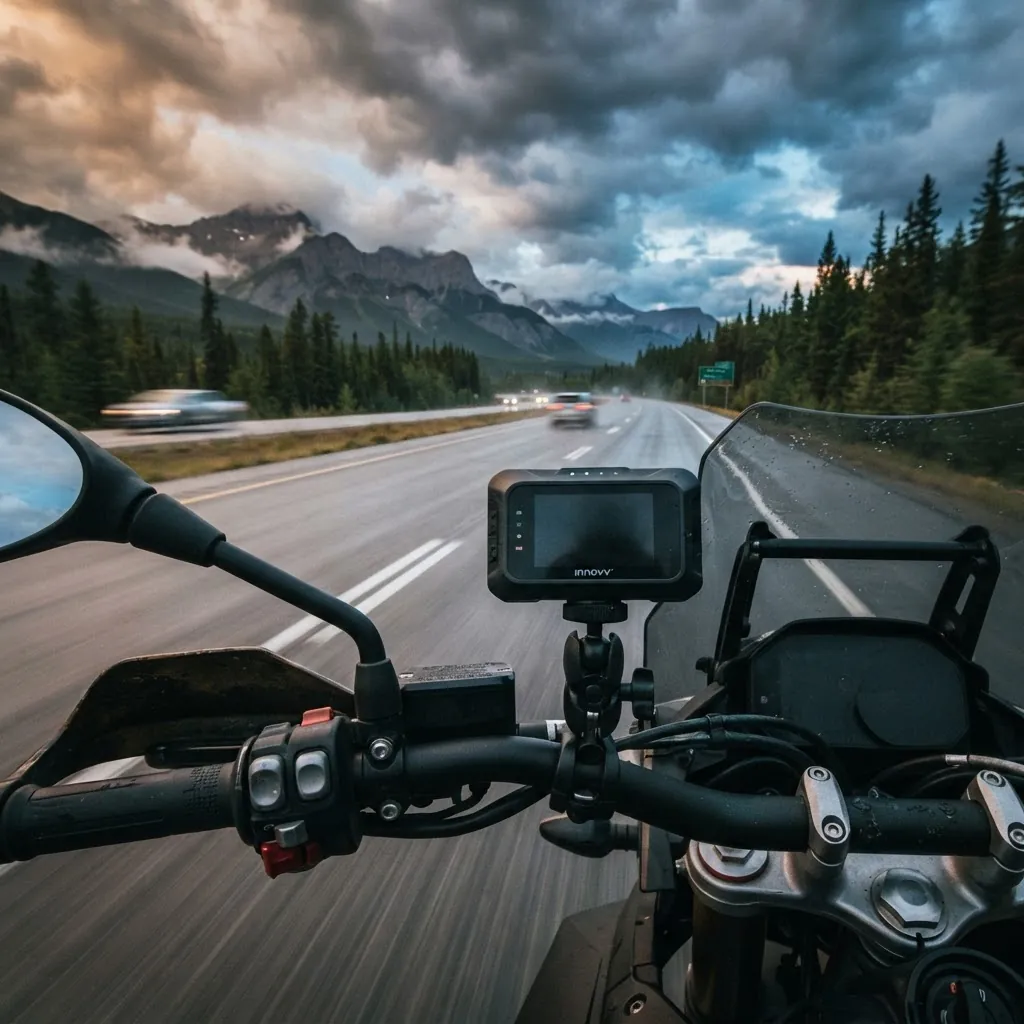
Best Motorcycle Dash Cam in Canada 2026: What Actually Works on the Road
A motorcycle dash cam is one of those things that feels optional until you need it — and then you really need it. After putting 10,000 km (6,200 miles) on my 2024 Indian Pursuit, including multi-day tours through Ontario, New Brunswick, and Quebec, here's what I've learned about what actually works for Canadian touring riders.
Why Canadian Conditions Are Harder on Dash Cams
Canadian summers can push 35°C (95°F) on asphalt. Canadian springs and falls can hit 3°C (37°F) on a morning departure. That 30+ degree swing is brutal on electronics, especially anything mounted in direct sun on a black fairing. Most consumer dash cams are rated to 60–65°C internal — that sounds like a lot until you factor in solar gain on a mounted unit sitting in the sun for six hours.
Table of Contents
Vibration is the other killer. Motorcycles — especially V-twins like the Indian PowerPlus 108ci — transmit significant vibration through the frame at idle and low RPM. A dash cam not designed for this will develop loose mounts, corrupted files, and premature storage failure within one riding season.
Front and Rear: Why You Need Both
Front-only coverage is the bare minimum. If someone rear-ends you — and it happens more than you'd think on longer tours — a front cam has no record of it. A front/rear setup gives you complete coverage for insurance and legal purposes. Most good motorcycle dash cam systems now offer dual-channel recording in a single unit or as an add-on rear cam.
What to Look For
- Heat tolerance: Look for units rated to at least 70°C internal operating temp, or ones with supercapacitors instead of lithium batteries (supercaps handle heat far better).
- Vibration resistance: Motorcycle-specific mounts with rubber dampening are non-negotiable. Generic mounts will work loose.
- Loop recording: Standard feature — records over old footage when storage is full. Make sure it's reliable and doesn't corrupt files on power cut.
- Resolution: 1080p is the minimum. 2K or 4K is better for reading plates in incident footage.
- Parking mode: Useful if you park in public places and want coverage while the bike is off.
- Waterproofing: IP65 or better. Canadian weather doesn't wait for a good camera day.
Top Picks for 2026
VIOFO MT1 (Best Overall): Motorcycle-specific, dual-channel front/rear, 2K resolution, supercapacitor design handles extreme temps, solid rubber mount system. This is the benchmark for touring riders in 2026.
Garmin Dash Cam Tandem (Best for Integration): If you already run Garmin navigation on the bike, the Tandem integrates neatly. 180-degree dual lens captures front and interior/rear simultaneously. Not as rugged as the MT1 but excellent software integration.
INNOVV K5 (Best Budget Option): Waterproof, 1080p, decent night vision, straightforward install. Not as feature-rich as the MT1 but solid entry-level for riders who just want basic coverage.
Installation on the Indian Pursuit
The Pursuit's full fairing makes for a clean front camera mount — you can run cables internally along the fairing edge and keep the whole install invisible. The rear mount goes on the fender area or luggage rack depending on your setup. I'd recommend hiring a shop for the wiring if you're not comfortable with motorcycle electrical — a poor connection on a bike that sees rain is a problem waiting to happen.
Frequently Asked Questions
Do you need a dash cam on a motorcycle in Canada?
A dash cam is not legally required for motorcycles in Canada, but it is highly recommended. In the event of an accident, dash cam footage provides crucial evidence for insurance claims and legal proceedings. Motorcycle riders are particularly vulnerable and footage can protect you in disputes.
What is the best motorcycle dash cam for 2026?
The best motorcycle dash cam depends on your needs. For continuous recording with loop mode, a dedicated motorcycle dash cam system with front and rear cameras is ideal. For dual-purpose use, action cameras like the Insta360 Ace Pro 2 or Insta360 X5 work well when mounted with loop recording enabled.
Can I use a GoPro as a motorcycle dash cam?
Yes, but GoPro cameras are not designed for continuous loop recording like a dedicated dash cam. They overheat during extended recording and lack the automatic incident detection features of purpose-built dash cams. For daily commuting footage, a dedicated motorcycle dash cam is a better choice.
How much does a motorcycle dash cam cost in Canada?
Motorcycle dash cams in Canada range from $80 CAD for basic single-camera units to $400+ CAD for premium front-and-rear systems with GPS and WiFi. Mid-range options around $150-250 CAD offer the best balance of quality and value for most riders.
Buy on Amazon
Affiliate Disclosure: As an Amazon Associate I earn from qualifying purchases. If you buy through these links, I may earn a small commission at no extra cost to you.