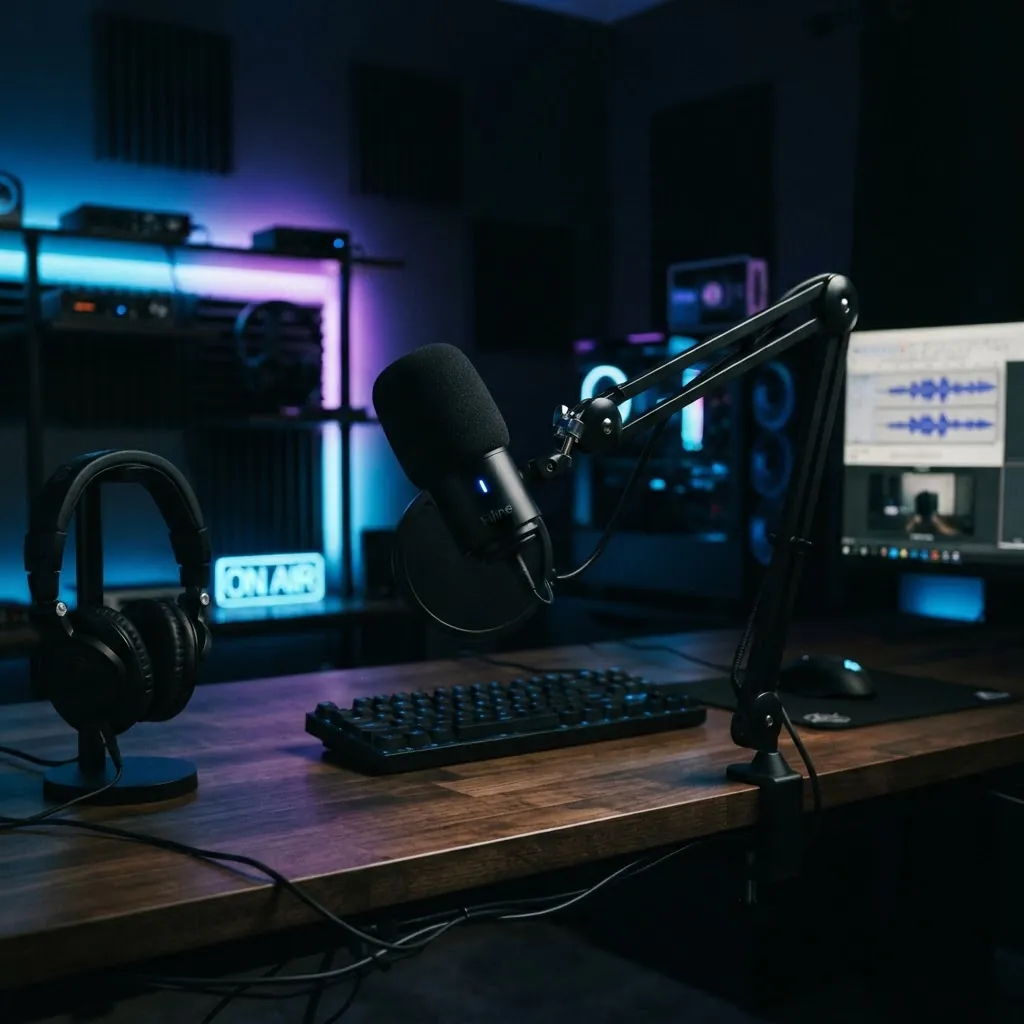
3 USB Microphones Worth Buying for Content Creators (2026)
You don't need to spend $300 on a microphone to sound professional. In 2026, sub-$100 USB mics have leveled up — better noise cancellation, stronger build quality, and real studio sound without the mixer complexity.
Why USB Mics Are the Smart Choice for New Creators
USB microphones plug straight into your computer. No audio interface, no cables, no learning curve. They're ideal if you're starting YouTube, streaming, or podcasting on a tight budget. The best part? They've gotten genuinely good.
Table of Contents
In 2026, mid-tier USB mics capture detail that used to require expensive XLR setups. Noise rejection is better, gain levels are easier to manage, and you can record immediately. That matters when you're testing ideas or building consistency.
Top 3 Budget USB Mics Under $100
After reviewing affordable mics over the past year, these three stand out for actual output quality and durability:
1. Audio-Technica AT2020USB+ — Best All-Around ($99–$120)
The AT2020USB+ is the gold standard at this price point. Cardioid pattern captures clean vocals and dialogue without picking up room noise. The build feels solid — metal body, good weight. Plug it in and it works with zero setup.
Real talk: the cable is short, but that's intentional to reduce interference. If you need distance, a USB extension works fine. Pick one up here: Audio-Technica AT2020USB+ on Amazon.ca.
2. Rode NT-USB Mini — Best Compact ($79–$89)
If desk space is tight, the NT-USB Mini delivers. Small but mighty — it's got the same capsule quality as Rode's full-size studio mics. Works great for voiceovers, narration, and talking-head YouTube content.
The headphone output is a game-changer too. You can monitor yourself in real-time without latency. Check it out: Rode NT-USB Mini on Amazon.ca.
3. HyperX QuadCast — Best for Gaming & Streaming ($79–$99)
If you stream or do gaming content, the HyperX QuadCast has built-in LED muting and vibration isolation. The stand is solid, doesn't require extra arms or shocks. RGB is adjustable — tone it down for professional work.
Sound profile is slightly brighter than the AT2020, which works well for high-energy content. Find it: HyperX QuadCast on Amazon.ca.
What Separates Budget Mics From Expensive Ones
The gap has shrunk. A $90 mic in 2026 captures nearly as much detail as a $300 XLR mic from 2015. Where you see the difference:
- Durability: High-end mics last 10+ years. Budget mics last 3–5 if you're rough with them.
- Flexibility: Premium mics work with multiple input types. Budget USB mics are USB-only.
- Accessories: Expensive mics come with shock mounts and pop filters. Budget options need upgrades.
- Room treatment dependency: Cheaper mics need quieter rooms. Better mics forgive background noise.
Accessories You Actually Need
The mic itself is just the start. These additions cost $20–$40 and make a real difference:
- Pop filter: Reduces plosive sounds (p's and b's). Almost essential for vocals.
- Shock mount: Isolates vibration from your desk. Less rumble, cleaner recordings.
- Boom arm: Positions the mic closer to your mouth without awkward angling. Sounds more professional.
- USB cable extender: If your mic cable is short and positioning is weird, a 6-foot extension helps.
Budget Mic Tips That Actually Work
Even a $90 mic can sound like a $300 setup if you use it right:
- Record in a smaller room. Less echo and room noise. Closets and bathrooms work if you're desperate.
- Keep the mic 4–6 inches from your mouth. Closer isn't always better — this is the sweet spot for most USB mics.
- Use headphones while recording. You'll hear issues in real-time, not after export.
- Adjust gain properly. Peaks should hit around -6dB on your recording software. Not louder — that clips.
- Test before publishing. Do a 2-minute test recording. Play it back on phone speakers. That's how viewers hear it.
The Bottom Line
If you're starting content creation, spending $100 on a solid USB mic is smarter than spending $500 on gear you might not use. The AT2020USB+ is the safe pick. The Rode mini if you need desk space. The HyperX if you're doing streaming or gaming.
What matters more than the mic? Consistency. Recording weekly, treating your room, and keeping yourself close enough to the capsule. Those things beat expensive gear every time.
Ready to Start?
Pick one of these three, add a $20 pop filter, and start recording. Audio quality matters for YouTube, podcasts, and streaming — but you don't need to spend a lot to sound good. These mics punch way above their price in 2026.