Canon EOS R6 Mark III Review: 32.5MP Hybrid Workhorse for 2026
Canon's R6 Mark III jumps from 24MP to 32.5MP, adds 7K Open Gate video, 40fps burst with pre-continuous capture, and 8.5 stops of IBIS. At $2,799 USD, it is the most capable hybrid camera in Canon's mid-range lineup. Here is what matters and what does not.
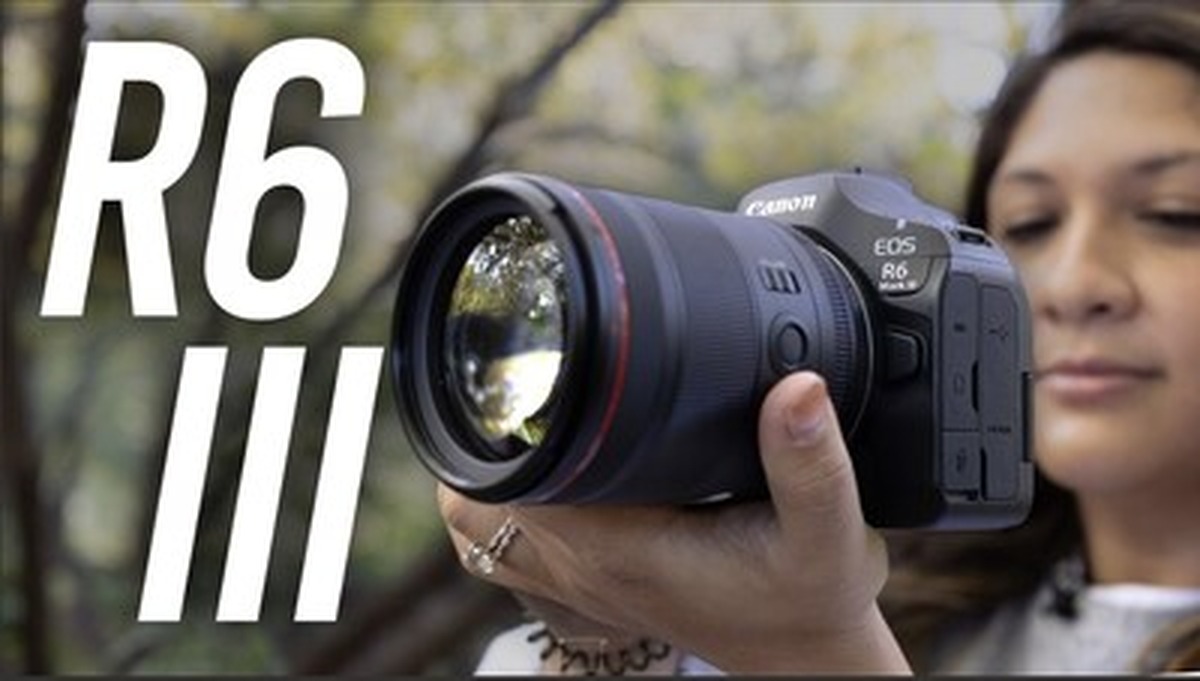
Image: Property of Canon U.S.A., Inc.
Table of Contents
The R6 Mark III at a Glance
The Canon EOS R6 Mark III launched in November 2025 as a direct successor to the popular R6 Mark II. The biggest change is the sensor: Canon replaced the 24.2MP chip with a new 32.5MP full-frame CMOS sensor — the same sensor generation used in the higher-end R5 Mark II. That is a 34% resolution increase in a single generation, and it closes the gap with Sony's 33MP A7 V and Nikon's 24.5MP Z6 III.
But the R6 III is not just about megapixels. Canon also added 7K Open Gate video recording (up from 4K60 in the Mark II), bumped the burst rate to 40fps with a 20-frame pre-continuous buffer, and improved the in-body image stabilization to 8.5 stops at the center. The DIGIC X processor carries over from the R5 Mark II, and the body weighs just 609g (21.5 oz) — lighter than the Sony A7 V (659g) and the Nikon Z6 III (790g).
Sensor & Image Quality
The move to 32.5MP is significant. For hybrid shooters who shoot both stills and video, the extra resolution means more cropping flexibility, larger prints, and better detail retention. Canon claims the new sensor delivers "wide dynamic range" and "exceptional clarity" — language that aligns with what the R5 Mark II already offers.
Compared to the R6 Mark II's 24.2MP sensor, the R6 III gives you roughly 34% more pixels. That translates to prints up to 22 x 14 inches at 300 DPI without upscaling, versus about 19 x 13 inches on the Mark II. For most photographers, this is the difference between "enough" and "comfortable."
The in-body image stabilization has also been upgraded. The R6 III offers up to 8.5 stops of stabilization at the center and 7.5 stops at the periphery — up from 8 stops on the R6 Mark II. In practical terms, this means you can shoot handheld at shutter speeds as slow as 1/2 second in good conditions and still get sharp results.
Autofocus & Burst Speed
The R6 Mark III shoots at up to 40 frames per second with the electronic shutter, with a 20-frame pre-continuous buffer. The pre-continuous buffer is the standout feature — it captures 20 frames before you fully press the shutter, so you do not miss the moment. This is particularly useful for wildlife and sports where the decisive moment is unpredictable.
Canon's Dual Pixel Intelligent AF system carries over from the R5 Mark II, with subject detection for people, animals, birds, and vehicles. The autofocus tracking is reportedly fast and reliable, with eye detection that locks on quickly even in low light.
For context, the Sony A7 V shoots at 30fps, and the Nikon Z6 III shoots at 20fps RAW (or 60fps JPEG). The R6 III's 40fps with pre-continuous capture puts it ahead of both in pure burst speed.
Video Capabilities
The biggest video upgrade is 7K Open Gate recording — Canon's name for full sensor readout without cropping. This gives you the full 32.5MP sensor area for video, which you can then crop to 4K, 6K, or any other format in post. The R6 Mark II topped out at 4K60, so this is a major step up.
The R6 III also records 4K at up to 120p without crop, which is useful for slow-motion work. Internal recording uses Canon's Movie Servo AF for smooth focus transitions, and there is a dedicated video menu that separates stills and video settings.
One thing the R6 III does not do: 8K video. If you need 8K, the Canon R5 Mark II ($4,299) is the step up. But for most hybrid shooters, 7K Open Gate plus 4K120 is more than enough.
Full Spec Table
| Feature | Canon EOS R6 Mark III |
|---|---|
| Sensor | 32.5MP full-frame CMOS |
| Processor | DIGIC X |
| Burst (electronic) | 40 fps with 20-frame pre-continuous |
| Max video | 7K Open Gate, 4K120p (no crop) |
| IBIS | 8.5 stops (center), 7.5 stops (periphery) |
| ISO range | 100-102,400 (expandable) |
| Viewfinder | 0.39" OLED, 5.76M dots |
| Screen | 3.0" vari-angle touchscreen, 1.62M dots |
| Memory cards | Single CFexpress Type B + SD UHS-II |
| Weight | 609g (21.5 oz) |
| Dimensions | 138.8 x 98.3 x 88.4 mm |
| Weather sealing | Yes (dust and moisture resistant) |
| Price (body) | $2,799 USD / CAD $3,399.99 (on sale from $3,499.99) |
| Price (kit) | CAD $3,799.99 with RF 24-105mm F4-7.1 IS STM |
Price & Value
At $2,799 USD body only, the R6 Mark III sits in a competitive sweet spot. In Canada, Canon Canada lists it at CAD $3,399.99, currently on sale from $3,499.99 through September 3, 2026. The kit with the RF 24-105mm F4-7.1 IS STM lens is CAD $3,799.99 (sale from $3,899.99).
How does that compare?
- Sony A7 V: ~$3,299 CAD — 33MP, 30fps, 4K60, 8 stops IBIS
- Nikon Z6 III: ~$3,049 CAD — 24.5MP, 20fps RAW, 6K60 RAW, 8 stops IBIS
- Canon R6 III: $3,399.99 CAD — 32.5MP, 40fps, 7K Open Gate, 8.5 stops IBIS
The R6 III is priced between the Z6 III and A7 V. It offers the highest burst rate (40fps), the highest resolution of the three (32.5MP vs 24.5MP and 33MP), and the most capable video format (7K Open Gate). If you want one camera that does everything well without paying $4,000+ for a flagship, the R6 III is the strongest all-rounder in this price bracket.
The Verdict
The Canon EOS R6 Mark III is the most complete hybrid camera in Canon's mid-range lineup. The 32.5MP sensor brings it to parity with Sony's A7 V in resolution, the 40fps burst with pre-continuous capture beats both the A7 V (30fps) and Z6 III (20fps RAW), and 7K Open Gate video is a feature that neither competitor offers at this price.
If you shoot both photo and video and you are choosing between the R6 III, A7 V, and Z6 III, the R6 III offers the best balance of speed, resolution, and video capability. The Z6 III has better RAW video (6K60 N-RAW), and the A7 V has Sony's superior autofocus tracking, but neither matches the R6 III's overall package at $2,799.
Who should buy it: Hybrid shooters, sports and wildlife photographers who need 40fps, and video creators who want 7K Open Gate without stepping up to the R5 Mark II.
Who should skip it: R6 Mark II owners who only shoot stills at 24MP and are happy with 4K60 video. The upgrade is significant but not essential for everyone.