DJI Osmo 360 vs Insta360 X5: Which 360 Camera Wins in 2026?
DJI entered the 360 camera market with bigger sensors and 8K/50fps. Insta360 answered with replaceable lenses and deeper waterproofing. I own two X5 cameras and use them on my motorcycle — here's the honest spec breakdown.
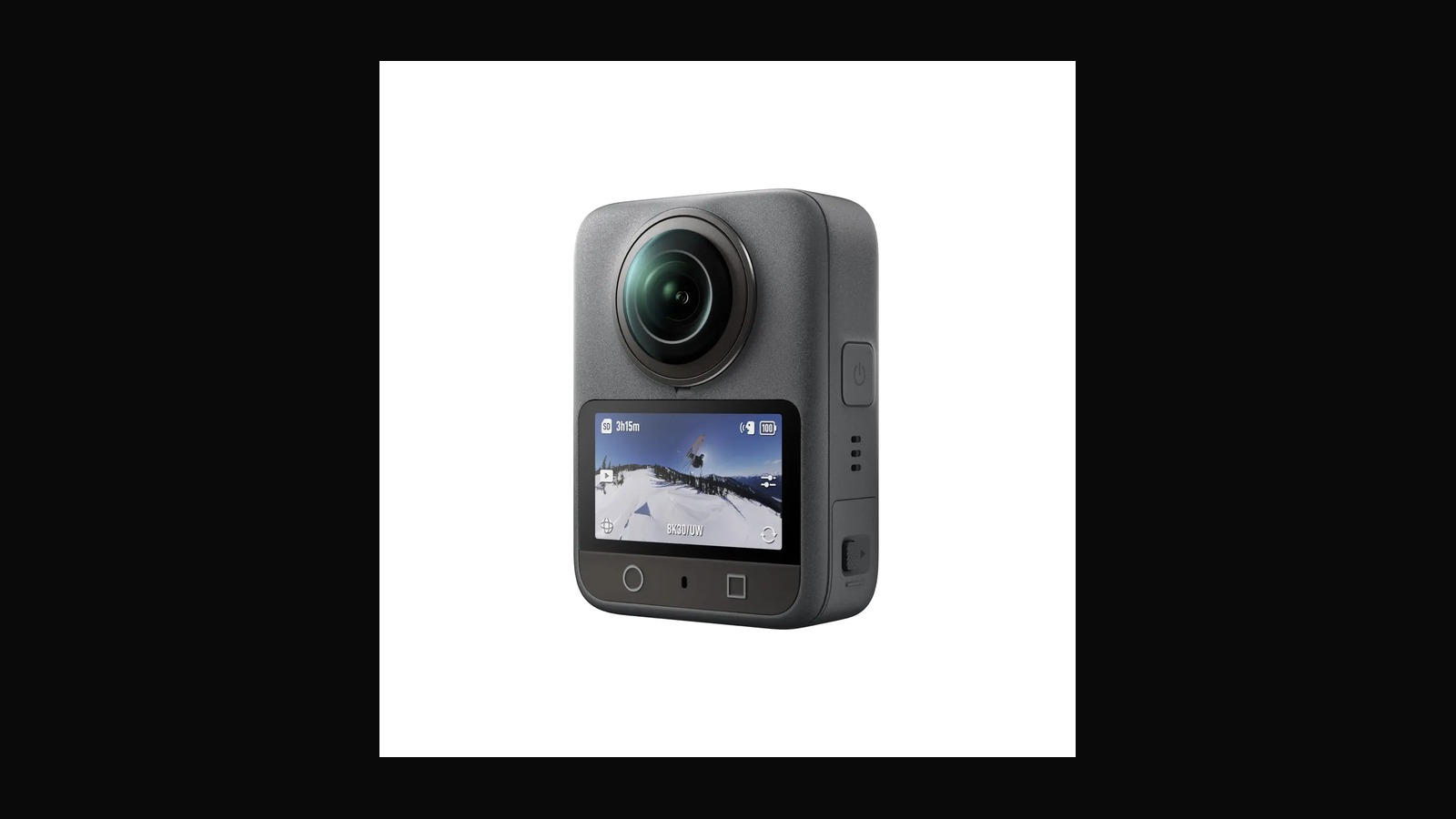
Image: Property of DJI.
Table of Contents
Sensors & Image Quality
This is where DJI made its biggest statement. The Osmo 360 packs dual 1/1.1-inch CMOS sensors — noticeably larger than the X5's dual 1/1.28-inch CMOS sensors. In practical terms, bigger sensors capture more light, which means cleaner low-light footage and better dynamic range.
The aperture edge also goes to DJI: f/1.9 vs f/2.0 on the X5. That's a marginal difference, but every bit helps in low light.
For photos, the Osmo 360 shoots 120MP panoramic images (15520×7760) vs the X5's 72MP (11904×5952). Higher resolution means more cropping flexibility when you reframe in post — a real advantage for content creators who want to pull still frames from 360 footage.
Edge: DJI Osmo 360 — bigger sensors, faster aperture, higher photo resolution.
Video Resolution & Frame Rates
Both cameras shoot 8K 360 video, but DJI offers more frame rate flexibility:
| Video Mode | DJI Osmo 360 | Insta360 X5 |
|---|---|---|
| 8K 360 (max) | 8K/50fps | 8K/30fps |
| 6K 360 (max) | 6K/60fps | 5.7K/60fps |
| 4K single-lens (max) | 4K/120fps (Boost) | 4K/120fps |
| 5K single-lens | 5K/60fps | — |
| 2K selfie (max) | 2K/240fps | — |
The Osmo 360's 8K/50fps is a real differentiator. For action sports and fast motion, 50fps gives you smoother footage and better frame extraction than 30fps. The X5 maxes out at 8K/30, which is fine for most use cases but limits slow-motion flexibility at max resolution.
Edge: DJI Osmo 360 — more resolution options, higher max frame rate at 8K.
Battery Life
At first glance, the X5's "3-hour battery" marketing sounds dominant. But that 3 hours is at 5.7K/24fps in Endurance mode. At the max 8K/30fps setting, both cameras are surprisingly close:
| Recording Mode | DJI Osmo 360 | Insta360 X5 |
|---|---|---|
| 8K/30fps | 100 min | 93 min |
| Endurance mode | 190 min (6K/24) | 208 min (5.7K/24) |
| Battery capacity | 1950 mAh | 2400 mAh |
| Charge to 80% | ~36 min | ~20 min |
The X5 charges faster (20 min to 80% vs 36 min) and has a larger battery cell (2400 mAh vs 1950 mAh). But at 8K/30, the Osmo 360 actually lasts 7 minutes longer per charge, likely due to DJI's more efficient processor or different power management.
Edge: Tie — Osmo 360 wins at 8K/30, X5 wins in endurance mode and charging speed.
Build, Weight & Waterproofing
The Osmo 360 is lighter at 183g vs the X5's 200g. That 17g difference won't matter on a selfie stick, but it adds up if you're carrying multiple cameras for a shoot.
Waterproofing goes to the X5: 15m (49ft) vs DJI's 10m (33ft). Both are IP68 rated, but if you're snorkeling or the camera takes a dive off a kayak, the X5 can go deeper without a dive case. Both have dive cases available for scuba depths (60m for X5, not specified for DJI).
Both cameras operate down to -20°C (-4°F) — essential for cold-weather riding in Canada. I've used my X5 in sub-zero temperatures on the Indian Pursuit and it kept recording without issues.
Edge: Insta360 X5 — deeper waterproofing. DJI wins on weight.
Key Features Comparison
The feature sets diverge in ways that matter depending on your use case:
| Feature | DJI Osmo 360 | Insta360 X5 |
|---|---|---|
| Replaceable lenses | No | Yes (~$30/swap) |
| Built-in storage | 128GB | No (microSD only) |
| Pre-recording | Yes (up to 5 min) | Not confirmed |
| Built-in wind guard | — | Yes |
| Invisible selfie stick | Yes | Yes (refined) |
| PureVideo low-light mode | — | Yes |
| Wi-Fi | Wi-Fi 6 | Wi-Fi 5 |
| Screen | 2.0" OLED (314×556) | 440×696 (higher res) |
| Stabilization | RockSteady 3.0 + HorizonSteady | FlowState + Horizon Lock |
| Cold resistance | -20°C (-4°F) | -20°C (-4°F) |
The replaceable lenses on the X5 are its single biggest advantage for action use. If you scratch a lens on the Osmo 360, you're sending the camera in for repair. On the X5, you unscrew it and pop in a $30 replacement. For motorcycle riders who blast through bugs and gravel at 120 km/h (75 mph), this is a game-changer.
The built-in 128GB storage on the Osmo 360 is a nice safety net — you can start shooting immediately without hunting for a microSD card. The X5 requires a card (UHS-I V30 or higher).
Pre-recording on the Osmo 360 (up to 5 minutes of buffered footage before you hit record) is a feature action shooters will love — you never miss the shot because you were too slow to press record.
Wi-Fi 6 on the Osmo 360 means faster file transfers to your phone. The X5 uses Wi-Fi 5 (802.11ac), which is still fast but noticeably slower when offloading 8K footage.
Full Spec Table
| Specification | DJI Osmo 360 | Insta360 X5 |
|---|---|---|
| Sensor (dual) | 1/1.1-inch CMOS | 1/1.28-inch CMOS |
| Aperture | f/1.9 | f/2.0 |
| Focal length | — | 6mm |
| Max 360 video | 8K/50fps (7680×3840) | 8K/30fps (7680×3840) |
| Single-lens video | 5K/60fps, 4K/120fps | 4K/120fps |
| Max photo (panoramic) | 120MP (15520×7760) | 72MP (11904×5952) |
| Battery (8K/30) | 100 min | 93 min |
| Battery capacity | 1950 mAh | 2400 mAh |
| Weight | 183g | 200g |
| Waterproof | 10m (IP68) | 15m (IPX8) |
| Built-in storage | 128GB | None (microSD) |
| Replaceable lenses | No | Yes |
| Screen | 2.0" OLED (314×556) | 440×696 |
| Wi-Fi | Wi-Fi 6 (802.11ax) | Wi-Fi 5 (802.11ac) |
| Bluetooth | BLE 5.1 | BLE 5.2 |
| USB | USB 3.1 Type-C | USB 3.0 Type-C |
| Pre-recording | Yes (up to 5 min) | Not confirmed |
| Operating temp | -20°C to 45°C (-4°F to 113°F) | -20°C to 40°C (-4°F to 104°F) |
| Stabilization | RockSteady 3.0 + HorizonSteady | FlowState + Horizon Lock |
| MSRP | $549.99 USD | $549.99 USD |
| Street price (Aug 2026) | ~$369-389 | $549.99 |
Motorcycle Touring Perspective
I've put thousands of kilometres on my X5 cameras mounted to my Indian Pursuit. Here's where the specs translate to real-world riding:
Replaceable lenses are non-negotiable for motorcycles. At highway speeds, road grit, sand, and bug impacts will eventually scratch any lens. On the X5, I've swapped lenses twice in a year — $60 total. On the Osmo 360, that same damage means a warranty claim or a repair bill.
The invisible selfie stick effect works on both cameras, but the X5's implementation is more refined after five generations of development (X, X2, X3, X4, X5). The stitching where the selfie stick would appear is cleaner in my experience.
The built-in wind guard on the X5 matters at 120 km/h (75 mph). Wind noise destroys audio on action cameras. The X5's wind guard doesn't eliminate it entirely, but it reduces it enough that voice-over narration is usable at moderate speeds.
Cold weather performance is equal — both handle -20°C (-4°F). I ride into November in New Brunswick, and the X5 keeps recording. The Osmo 360 should perform similarly based on its identical temperature rating.
The X5's PureVideo mode is something I use on overcast days and dusk rides. It's an AI-powered low-light mode that noticeably cleans up noise in challenging lighting. The Osmo 360's larger sensors might reduce the need for this, but I can't compare directly without testing the DJI.
Get the Insta360 X5
I own two of these and use them on every ride. Replaceable lenses, wind guard, and invisible selfie stick make it the best 360 camera for motorcycle content.
Price & Value
Both cameras launched at $549.99 USD, but the market has treated them very differently:
The DJI Osmo 360 has been heavily discounted since its July 2025 launch. As of August 2026, street prices sit around $369-389 at B&H, Kenmore Camera, and Amazon. Prime Day deals dropped it to $357.
The Insta360 X5 has held firm at $549.99 on Amazon since its April 2025 launch. Limited edition colors (Arctic White, Satin White) occasionally sell out but the Midnight Black stays in stock.
This price gap tells you something: either DJI overestimated demand, or Insta360 priced correctly. In practice, the Osmo 360 at $369 is arguably the best value in 360 cameras right now. At $549, the X5 is more expensive but justifies it with replaceable lenses and the mature Insta360 software ecosystem.
The Verdict
Which should you buy?
For motorcycle riding and action sports: The Insta360 X5 wins. Replaceable lenses, wind guard, deeper waterproofing, and the invisible selfie stick are features that matter on a bike. I own two for a reason. The X5 is the camera I trust at 120 km/h on the Pursuit.
For pure image quality on a budget: The DJI Osmo 360 wins. Bigger sensors, 8K/50fps, 120MP photos, built-in storage, pre-recording, and Wi-Fi 6 — all for ~$369 street. If you don't need replaceable lenses and you're shooting in controlled environments, the Osmo 360 offers more for less.
For content creators who edit heavily: The Insta360 app and software ecosystem is more mature. Five generations of 360 cameras means the editing tools, reframing workflow, and AI features are polished. DJI's Mimo app is newer to 360 and still catching up.
My pick: Insta360 X5 — but I'm biased. I own two, I use them every week, and the replaceable lenses have saved me real money. If DJI adds replaceable lenses to the Osmo 360 v2, that changes the calculus entirely.
FAQ
Sources: DJI official specs (dji.com/360/specs), Insta360 official specs (insta360.com/product/insta360-x5, onlinemanual.insta360.com/x5/en-us/specs), Amazon.com product listing (B0DZCBYCNY), B&H Photo Video, CNET review, Dive Magazine specs, Pexels for imagery. All specs verified August 8, 2026. Street prices may fluctuate.