Phone Gimbal vs DJI Osmo Pocket 3: Stop Fighting Your Phone (2026)
In This Article
The smartphone gimbal pitch sounds great on paper: take the camera you already have, attach a $130 stabilizer, and shoot professional-looking video. Keep everything in one ecosystem. Save money. Simple.
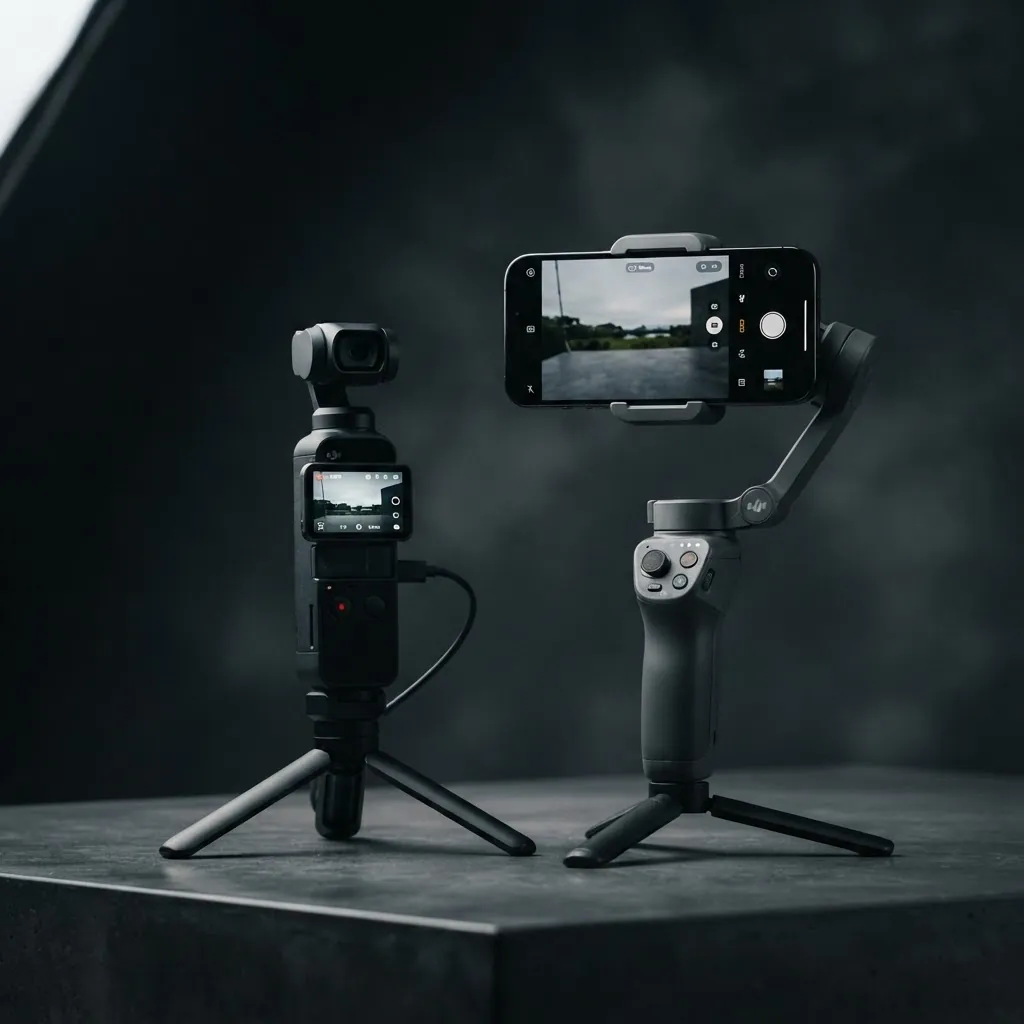
The problem is what you give up to make it work. Your phone — the device you use for navigation, messages, calls, music, and the other 90% of your day — is now locked into a rig. You can't quickly pull it out for a notification. You can't switch to Maps without dismounting it. You're carrying more total bulk, not less. And meanwhile, DJI has been selling a device that does everything the phone gimbal combo does, does most of it better, and lets your phone go back to being a phone.
That's the actual comparison. Let me break down both sides honestly.
The Problem Nobody Talks About
Most phone gimbal reviews are written by people who evaluated the gimbal as a camera tool. They test stabilization, tracking, battery life, and video quality. What they don't talk about is the full-day experience of having your phone locked into a gimbal while you're trying to live your life and capture content at the same time.
At a tech event or on a travel day, your phone is doing multiple jobs simultaneously: navigation, communication, content capture. A gimbal collapses those into a single awkward rig. Every time you need to answer a text or check a map, you either unmount the phone (30 seconds, minimum), shoot with one thumb while navigating with the other, or just miss the message.
What a Phone Gimbal Actually Gets You
To be fair — a good phone gimbal genuinely solves the stabilization problem. The DJI Osmo Mobile 6 is the benchmark here. Three-axis mechanical stabilization eliminates shake at a level software stabilization simply can't match without heavy cropping. Subject tracking works well. The extension rod adds versatility for selfie angles and overhead shots. At ~$130–150 CAD on Amazon, it's an accessible upgrade.
Phone Gimbal Pros
- Uses camera you already own
- Lower entry cost (~$130–150 CAD)
- One device to charge/carry (sort of)
- Full phone camera feature access
- Portrait and landscape switching
Phone Gimbal Cons
- Phone unavailable while shooting
- Bulkier total rig than it looks
- Mounting/unmounting breaks workflow
- Battery drain on your only phone
- Phone camera sensor still has limits
The hidden cost is workflow friction. Every time you switch between "I'm shooting" and "I need my phone," there's a pause. Over a full day of content creation, those pauses add up. You start leaving the gimbal in your bag more and just shooting handheld — which defeats the point.
What the Osmo Pocket 3 Actually Gets You
The Osmo Pocket 3 is a 1-inch CMOS sensor pocket camera with a built-in 3-axis mechanical gimbal. It shoots 4K at up to 120fps, has a flip-out touchscreen for solo shooting, and handles low light significantly better than most smartphone cameras at similar price points. The whole unit fits in a jacket pocket.
Osmo Pocket 3 Pros
- Phone stays free — always accessible
- 1-inch sensor — better low light
- 4K/120fps — slow motion capability
- Built-in gimbal, no setup needed
- Dedicated battery — won't drain your phone
- Compact — fits in a pocket
Osmo Pocket 3 Cons
- Higher upfront cost
- Another device to charge and carry
- Fixed lens — no zoom flexibility
- Smaller screen than a phone
The 1-inch sensor is the key spec that often gets glossed over. Modern smartphone cameras are remarkably capable in daylight, but in mixed or low light — indoors, golden hour, overcast days — the larger sensor on the Pocket 3 collects significantly more light, producing cleaner footage with less noise. For anyone shooting events, travel, or reviews across changing conditions, this is a real-world advantage that shows up in every edit.
Head-to-Head: The Real Differences
Phone Gimbal vs Osmo Pocket 3 — Key Comparisons
Price Reality in Canada
This is where the honest conversation gets harder. The DJI Osmo Mobile 6 gimbal runs roughly $130–150 CAD on Amazon.ca. The Osmo Pocket 3 runs $579 CAD for the standard unit, or $649+ CAD for the Creator Combo that includes the wireless mic adapter, ND filters, and carrying case.
That's a $430–500 CAD gap. For a lot of people, that's a genuine barrier. But the honest comparison isn't gimbal cost vs Pocket 3 cost — it's total workflow value. If the gimbal means your phone is unavailable for a significant chunk of every shooting day, and you're reaching for your phone 20 times an hour for everything else life throws at you, the friction has a real cost in missed shots, missed messages, and general frustration.
The Creator Combo is worth the extra $70–100 CAD over the standard unit if you're using it for YouTube or travel content. The wireless mic adapter is the critical add-on — the Pocket 3's built-in mic is good for casual use but noticeably better with external audio in any environment with ambient noise.
Who Each Option Is Actually For
Buy the phone gimbal if: you're just getting started with video content, your shooting sessions are short and focused (not all-day), you're on a strict budget, or you primarily shoot stationary footage where you can set the rig down and pick your phone back up easily.
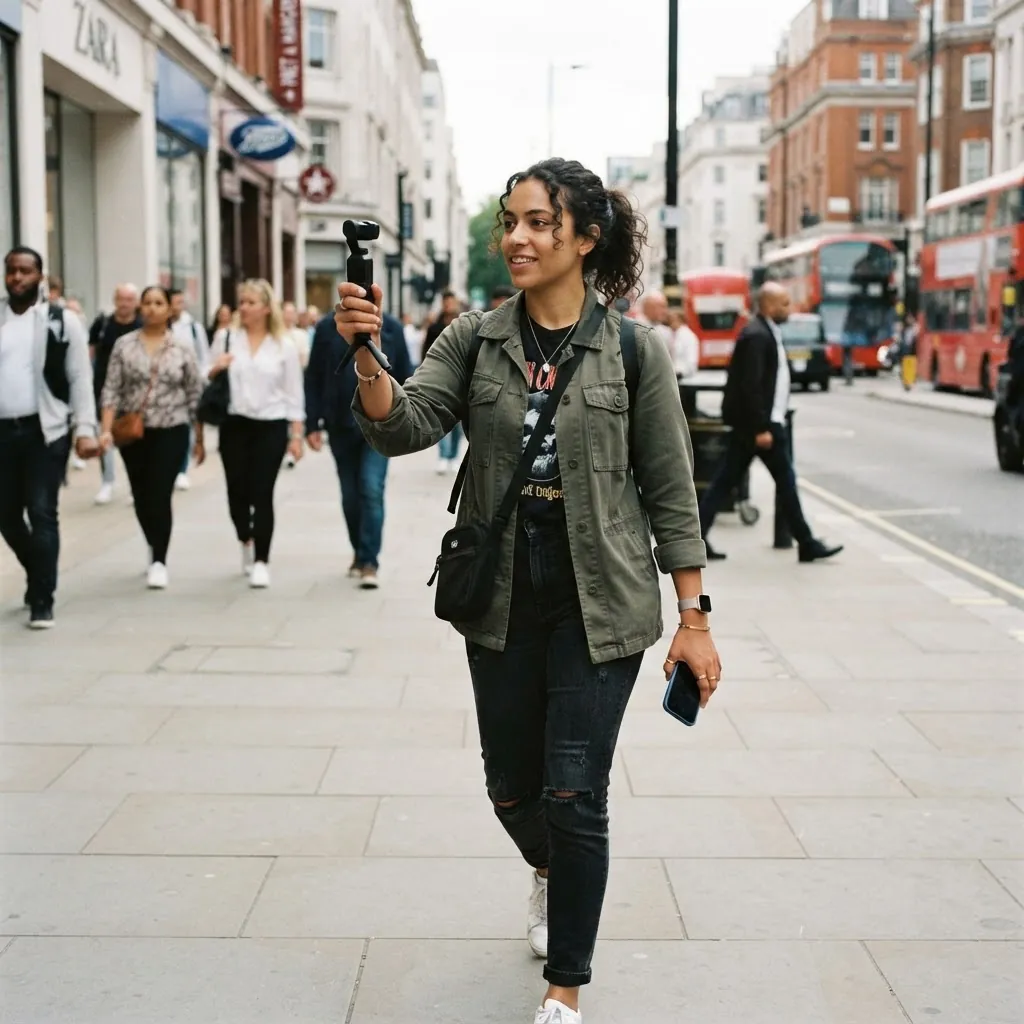
Buy the Osmo Pocket 3 if: you shoot on the move — travel, events, reviews in the field, walking tours, outdoor content — where your phone needs to stay accessible. If you're doing a full day of content at a tech event, on a road trip, or anywhere that your phone is also your navigation and communication device, the Pocket 3 pays for itself in workflow efficiency within the first week. The image quality step-up is a bonus on top of that.
The Creator Combo specifically makes sense if you're doing anything with voice — interviews, walk-and-talk vlogging, reviews in public spaces where ambient noise is a factor.
Verdict
If you can afford the Osmo Pocket 3, buy it instead of the gimbal. The image quality is better, the workflow is dramatically smoother, and you get your phone back — which turns out to matter more than most gimbal reviews will tell you.
If budget is the real constraint, the DJI Osmo Mobile 6 is a legitimate piece of kit and it genuinely works. Just go in with clear eyes about what you're trading: you're paying with your phone's availability every time you shoot, not just with dollars.
The question isn't really "which is better gear." The Pocket 3 is better gear. The question is whether the gap in your specific shooting situation justifies the price difference. For most active creators, it does.
Gear Mentioned — Verified Links
Frequently Asked Questions
What is the best smartphone gimbal for content creators?
The best smartphone gimbals include the DJI Osmo Mobile 6 and Hohem iSteady. Look for 3-axis stabilization, ActiveTrack subject tracking, foldable design, and magnetic phone mounting. Budget options start at $80 CAD.
Do smartphone gimbals work with all phones?
Most gimbals work with phones weighing up to 280g and up to 3.5 inches wide. Check the weight capacity before buying, especially with a large phone and case. Some gimbals require the manufacturer app for full feature access.
Is a smartphone gimbal better than a tripod?
They serve different purposes. A gimbal provides smooth moving shots and tracking. A tripod provides stability for static shots and time-lapses. Most creators benefit from having both — a gimbal for dynamic content, a tripod for static recordings.