Tim Cook Steps Down: His Apple Legacy and What John Ternus Means for the Future
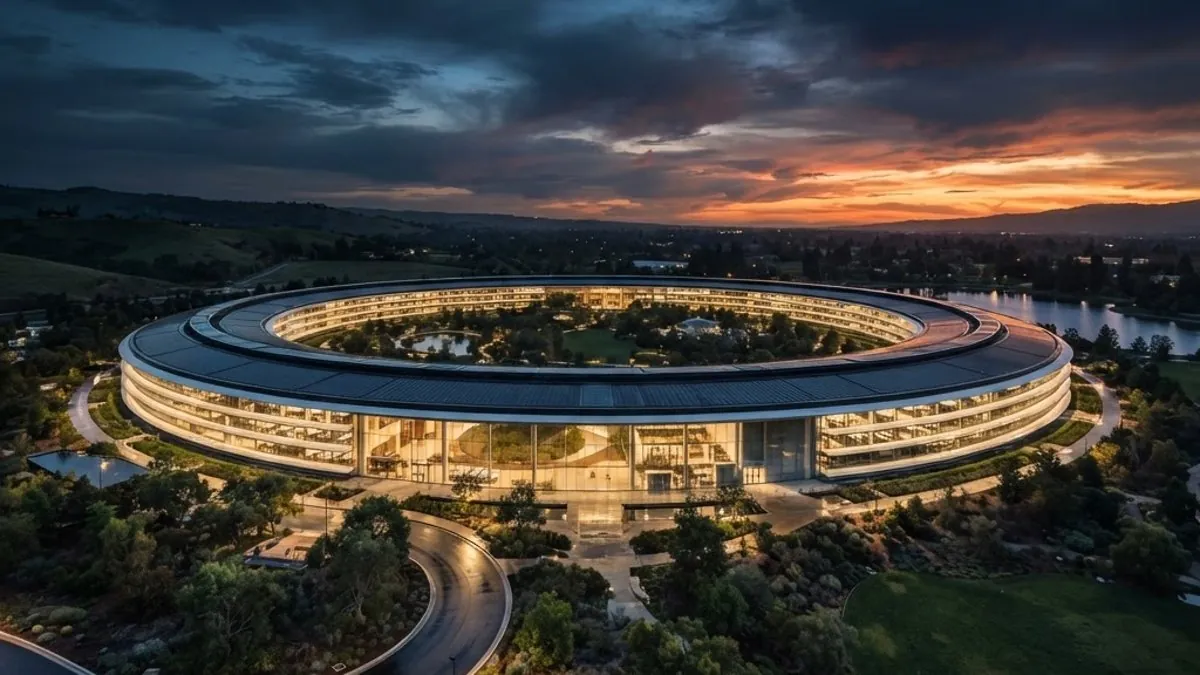
After 15 years as CEO, Tim Cook is handing the keys to Apple Park over to hardware chief John Ternus on September 1. Cook took Apple from $350 billion to $4 trillion — but the question now is whether Ternus can make Apple great, not just rich.
Table of Contents
The Announcement
On April 20, 2026, Apple made it official: Tim Cook will step down as CEO on September 1, 2026, transitioning to executive chairman of Apple's board. John Ternus, senior vice president of Hardware Engineering, will become Apple's next CEO.
The transition was approved unanimously by Apple's Board of Directors and follows what the company described as a "thoughtful, long-term succession planning process." Cook will continue as CEO through the summer, working closely with Ternus on a smooth handover.
"It has been the greatest privilege of my life to be the CEO of Apple," Cook said in the announcement. "John Ternus has the mind of an engineer, the soul of an innovator, and the heart to lead with integrity and with honor."
For his part, Ternus was effusive about the foundation Cook built: "Having spent almost my entire career at Apple, I have been lucky to have worked under Steve Jobs and to have had Tim Cook as my mentor."
What Cook Built: From Jobs to $4 Trillion
When Tim Cook took over from Steve Jobs in August 2011, Apple was a $350 billion company known primarily for the iPhone, Mac, and iPad. The prevailing question was whether anyone could fill Jobs's shoes.
Fifteen years later, that question has been answered definitively. Cook didn't try to be another Jobs — and that was exactly the point.
The Product Legacy
Cook oversaw the creation of entirely new product categories that didn't exist under Jobs:
- Apple Watch — now the world's most popular watch, full stop
- AirPods — the world's best-selling headphones, and now a hearing health device
- Apple Vision Pro — Apple's first spatial computing device
- Apple Pay, Apple Music, Apple TV — services that transformed Apple into a platform company
But Cook's most consequential decision may have been the transition to Apple-designed silicon. By moving away from Intel and designing its own A-series and M-series chips, Apple took control of its primary technology and delivered performance and efficiency gains that competitors still can't match.
The Business Legacy
Cook was never the product visionary Jobs was. He was something else: perhaps the greatest operations executive in tech history.
Apple Services grew from virtually nothing to a $100 billion-plus business — the equivalent of a Fortune 40 company on its own. The supply chain Cook built is legendary in its efficiency. And he expanded Apple's global footprint to more than 200 countries, with over 500 retail stores.
The Cook Era by the Numbers
That's a more than 1,000% increase in market capitalization. Yearly revenue nearly quadrupled. Apple's active installed base grew to 2.5 billion devices. And Cook did all of this while reducing Apple's carbon footprint by more than 60% below 2015 levels — during a period when revenue nearly doubled.
Who Is John Ternus?
If Cook was the operations genius, Ternus is the hardware guy.
Ternus joined Apple's product design team in 2001 — making him a 25-year veteran. He became vice president of Hardware Engineering in 2013 and was promoted to senior vice president in 2021. He has worked under both Steve Jobs and Tim Cook.
Throughout his tenure, Ternus has overseen hardware engineering across virtually every product category Apple makes. He was instrumental in the introduction of the iPad and AirPods, led the hardware for multiple generations of iPhone and Apple Watch, and drove the Mac's renaissance with the M-series transition.
His recent fingerprints are everywhere: the iPhone 17 Pro and Pro Max, the radically thin iPhone Air, and the new MacBook Neo all came from his team. He also led Apple's push into materials innovation — recycled aluminum across product lines, 3D-printed titanium in the Apple Watch Ultra 3, and new repairability techniques that extend product lifespans.
Before Apple, Ternus worked as a mechanical engineer at Virtual Research Systems. He holds a bachelor's degree in Mechanical Engineering from the University of Pennsylvania.
"I am profoundly grateful for this opportunity to carry Apple's mission forward. I am filled with optimism about what we can achieve in the years to come."
— John Ternus, Apple's incoming CEOWhat to Expect From Apple Under Ternus
The iPhone Fold Launch
Ternus will debut as CEO with what could be Apple's most significant product launch in a decade: the iPhone Fold (possibly branded as "iPhone Ultra"). Multiple reports indicate the foldable iPhone will headline Apple's September keynote — making it Ternus's first major moment as CEO.
This is fitting. A new product category, led by a hardware engineer who spent 25 years building the products that made Apple what it is. If the Fold succeeds, it signals that Apple under Ternus will be bold where Cook was careful.
Hardware-First Leadership
The transition from Cook to Ternus represents a philosophical shift. Cook was a supply chain and operations leader who happened to run a tech company. Ternus is a hardware engineer who has been building Apple's products for a quarter century.
Expect more emphasis on product innovation and less on operational efficiency. Apple's operations are already world-class — the room for growth is in products, not logistics.
Vision Pro Scaled Back
According to analyst Ming-Chi Kuo, Ternus has already authorized scaling back Apple's Vision Pro roadmap. A direct Vision Pro successor isn't expected until 2028 or 2029 at the earliest. This is a pragmatic decision — the Vision Pro hasn't achieved mainstream adoption, and Ternus appears to be redirecting resources toward products with broader appeal.
The Challenges Ahead
Ternus inherits a company in exceptional financial shape — but with real questions about its future direction.
1. AI. This is Ternus's biggest challenge. Apple has lagged behind competitors in artificial intelligence, and CNBC identified fixing Apple's AI strategy as the defining task of his tenure. Apple Intelligence exists, but it hasn't matched the capabilities of Google's Gemini or OpenAI's ChatGPT. Ternus needs to close that gap.
2. The Foldable Question. The iPhone Fold will be Apple's first new form factor since the Apple Watch. If it flops, it casts doubt on Ternus's product judgment. If it succeeds, it opens a new revenue stream that could carry Apple through the next decade.
3. China and Geopolitics. Cook was an exceptional diplomat — navigating US-China trade tensions, supply chain diversification, and regulatory pressure from both sides. As executive chairman, Cook will continue engaging with policymakers, but Ternus will need to develop his own diplomatic chops quickly.
4. The "Great vs. Rich" Question. As Forbes put it: "Tim Cook made Apple rich. Can its next CEO make it great?" Apple is financially dominant but hasn't introduced a category-defining product since the Apple Watch in 2015. Vision Pro hasn't become the next iPhone. The pressure is on Ternus to deliver something that makes people feel something — not just something that makes money.
Tim Cook took the company Steve Jobs built and made it the most valuable corporation in human history. That's not nothing. But the next chapter — foldable iPhones, AI competition, spatial computing, and whatever comes after — belongs to John Ternus. September 1 marks the end of the Cook era and the beginning of something new. Whether that something is a renaissance or a slow decline depends entirely on what Ternus does next.
Frequently Asked Questions
More Apple Coverage
Apple September 2026 Event: Everything ExpectediPhone 18 Pro, Apple Watch Series 12, and the iPhone Fold iPhone 18 Pro Rumors: Every Leak and Spec
Variable aperture camera, Dark Cherry color, pricing iPhone Fold Rumors: Price, Specs, Release Date
Everything we know about Apple's first foldable
Sources: Apple Newsroom press release (April 20, 2026); CNBC; CNN; NPR; BBC; TechCrunch; Forbes; Ming-Chi Kuo; Bloomberg. All financial figures sourced from Apple's official announcement and fiscal year reports.