DJI Osmo Action 6 in the Cold: What It Changes on a Motorcycle
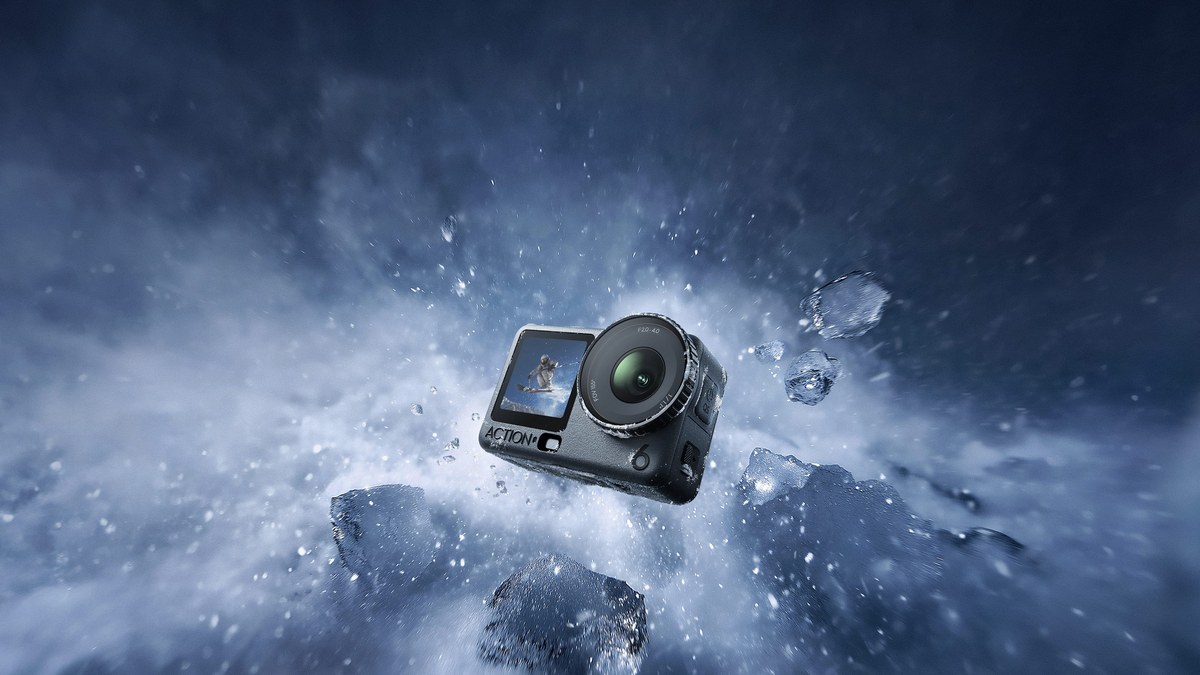
Photo: Property of DJI
In This Article
DJI's Osmo Action 6 is the first action camera in the Osmo line with a variable aperture, and that one change matters more on a motorcycle in November than any resolution figure on the box. Cold air, flat grey light and a vibrating mount are the three things that ruin late-season riding footage. Aperture is the control that answers the first two. Here is what the camera genuinely changes for a rider, and where the honest limits are.
Why a Variable Aperture Matters More Than 4K
The Osmo Action 6 opens to f/2.0 and stops down to f/4.0. Every action camera before it had a fixed aperture, which meant the only exposure tools you had were shutter speed, ISO and ND filters. On a bike that is a bad trade: slow the shutter and your footage smears at speed, raise the ISO and the grain shows in flat winter light.
Stopping down to f/4.0 gives you roughly two stops less light reaching the sensor without touching either of those. In practical terms that means you can hold a faster shutter in bright low-sun conditions, which is exactly what a ride along an open coastline at 2 pm in November throws at you. It also pulls the depth of field in, so the horizon stops competing with your bars and mirrors for the viewer's attention.
What it does not do is rescue a genuinely dark ride. At dusk, f/2.0 is the setting that earns its keep, and there is no substitute for light. The aperture is a daylight tool with a genuine second use in low light, not a night-vision feature.
The Sensor Behind 4K Custom
DJI paired the aperture with a 1/1.1-inch square CMOS sensor using 2.4µm fused large pixels. The square sensor is what makes the 4K Custom mode possible, because a square readout leaves you room to crop to whichever aspect ratio you want after the fact without throwing away the frame.
For a rider that matters because you rarely get the framing right on the first pass. A camera clamped to a crash bar sees the world at an angle. Being able to reframe in post, at full 4K, is worth more than a slightly wider field of view you cannot adjust later.
DJI rates the camera at 13.5 stops of dynamic range and records 4K at up to 120 fps. Thirteen and a half stops is the number to care about in winter, not the frame rate. Grey overcast skies over dark wet asphalt are a brutal contrast range, and headroom there is what keeps sky detail from turning into a white smear.
The Cold Battery Claim, Read Honestly
DJI markets the Action 6 as cold-resistant with up to four hours of battery life. Two things need separating in that sentence. Four hours is the headline figure, and it will not be four hours at 4K/120 with the screen on and the camera in a 2°C wind. Cold-resistant means the chemistry is selected to keep delivering in low temperatures, not that the capacity is unaffected.
The practical approach for a November ride is the one that has always worked: keep a spare battery inside a jacket pocket against your body, swap it when the camera warns, and let the cold one warm up before it goes back in. A battery that appears dead at 2°C usually has most of its charge left once it is warm again.
OsmoAudio and the Wind Problem
The camera supports OsmoAudio direct microphone connection, which pairs a compatible DJI mic without a receiver. That removes a box, a cable and a battery from your setup, and on a bike that is the difference between a rig you actually use and one you leave in the garage.
It does not solve wind noise on its own. No microphone does. What it does is let you get the mic into a place the wind cannot reach, usually inside the helmet behind the chin bar, without running a cable down your jacket to a receiver in a pocket. If you are recording voice-over while riding, that is the single biggest quality upgrade available to you.
A Settings Starting Point for a Cold Ride
These are starting points to adjust from, not a prescription:
- Bright, low sun: 4K at 60 fps, f/4.0, shutter at roughly twice your frame rate, ISO locked low. Stop down before you add an ND filter.
- Flat overcast: 4K at 60 fps, f/2.8 to f/4.0. The 13.5 stops of range do the work here; do not crush the shadows to make the image look punchy.
- Dusk and tunnel sections: f/2.0, accept a higher ISO, and cut your clip length so you are not hunting exposure mid-corner.
- Anything you will reframe: shoot the square 4K Custom readout and crop later.
The one setting worth locking before you leave is white balance. Auto white balance on a grey November day will drift as you pass between trees and open coast, and the cut will look like a mistake even when the exposure was perfect.
What It Does Not Fix
A variable aperture does not stop a mount from vibrating, and no action camera likes a single hard-mounted point on a faired bike. It does not keep your lens clear of road spray, which is a bigger problem in November than in July. And it does not make a 30-minute clip out of a cold battery in freezing wind.
The honest summary: the Action 6 removes the two compromises that hurt riding footage most, exposure control in changing light and mic setup complexity. Everything else about shooting on a bike in the cold is still on you, which is mostly preparation and a spare battery in a warm pocket.
Frequently Asked Questions
Does the DJI Osmo Action 6 have a variable aperture?
Yes. It is DJI's first action camera with a variable aperture, adjustable from f/2.0 to f/4.0.
Is the Osmo Action 6 good for cold weather riding?
DJI markets it as cold-resistant with up to four hours of battery life. In freezing wind, treat four hours as a fair-weather figure and carry a spare battery kept warm inside a jacket.
What does the variable aperture actually change on a motorcycle?
It lets you hold a faster shutter in bright conditions without adding an ND filter, and it tightens depth of field so the background competes less with the bike.
Do I need a receiver for an external microphone?
No. The Action 6 supports OsmoAudio direct microphone connection, so a compatible DJI mic pairs without a separate receiver.
What is the 4K Custom mode?
It uses the camera's square 1/1.1-inch sensor to record 4K footage you can reframe to a different aspect ratio in post without losing resolution.
Sources
- DJI Osmo Action 6 product page. Variable aperture f/2.0-f/4.0, 1/1.1-inch square CMOS with 2.4um fused large pixels, 13.5 stops dynamic range, 4K up to 120fps, cold-resistant battery claim, OsmoAudio support.
- CBV Distribution announcement. Confirms the variable aperture, sensor size and 4K 120fps specification at launch.
- Basic Tutorials launch coverage. Independent confirmation that the Action 6 is DJI's first action camera with a variable aperture.