Do You Actually Need a Motorcycle Airbag Vest? The Data Says Something Unexpected
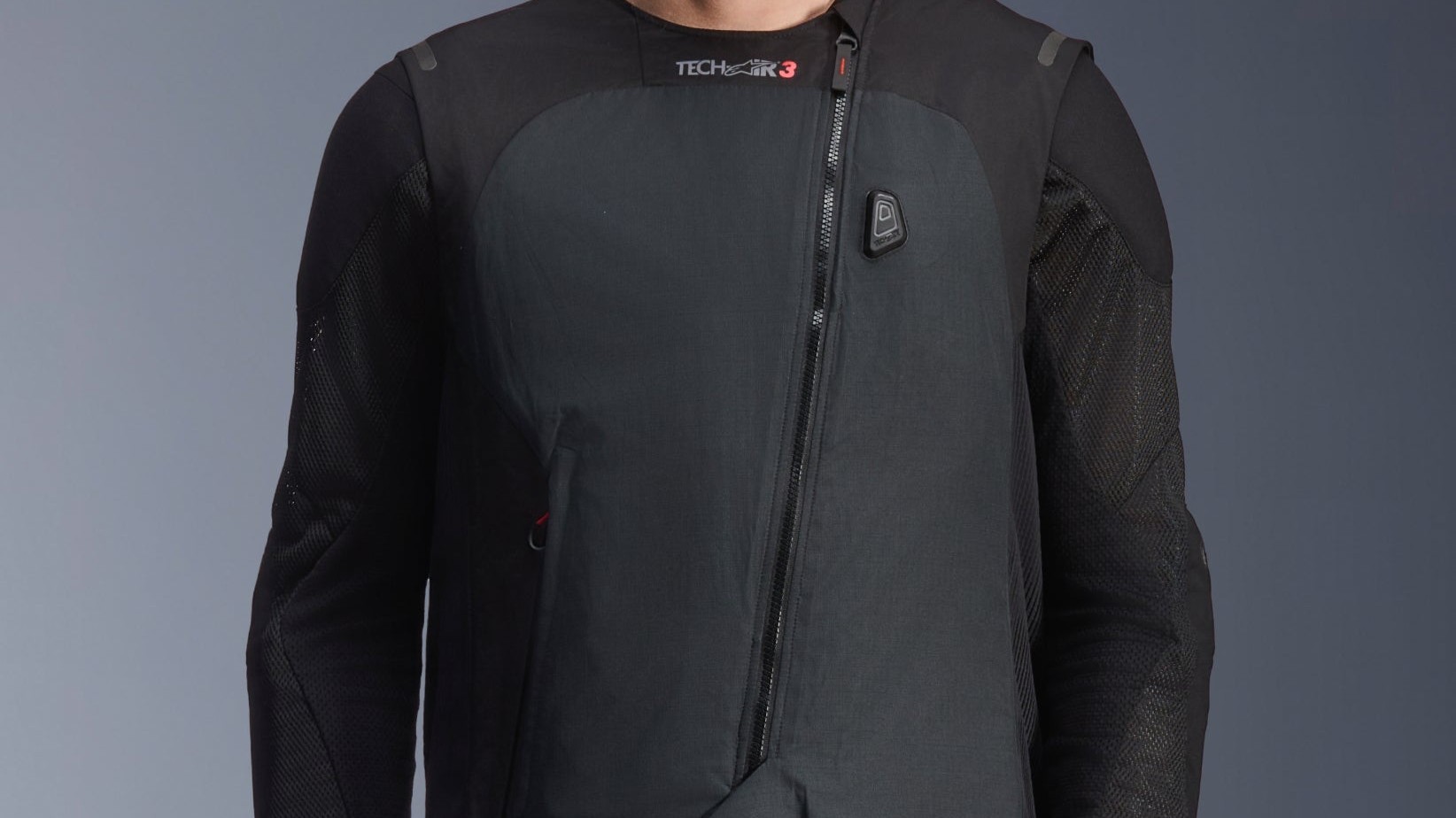
Image: Property of Alpinestars S.p.A.
I have ridden 200,000 km across 28 states and provinces, including Sturgis, Daytona, the Tail of the Dragon, and the Cabot Trail. I have never worn an airbag vest. I was rear-ended in Ottawa on my way home from ECIC Muskoka. So I finally looked at the actual data — and made a decision that surprised even me.
Table of Contents
The Question Every Rider Avoids
Every motorcycle rider knows the statistics. We ride anyway. We wear helmets, jackets, gloves, boots — the gear that feels normal. But the airbag vest sits in a weird category: it is the safety equipment that most riders know about, acknowledge works, and still do not buy.
I have been that rider. 200,000+ km on motorcycles. Sturgis, Daytona, Tail of the Dragon, the Cabot Trail, ECIC Muskoka. I was rear-ended in Ottawa on my Indian Pursuit coming home from ECIC. And through all of that, I never once wore an airbag vest.
So when I started researching this article, I expected to find data that confirmed my bias — that airbag vests are expensive, unnecessary for street riding, and only matter on the track. Instead, I found something more complicated.
What the Crash Data Actually Says
Let me start with the numbers, because the data tells a nuanced story that the marketing does not capture:
The good: Blunt-force trauma is the leading cause of severe injury and death in motorcycle accidents, not road rash or fractures. Airbag vests directly address blunt-force trauma to the chest, spine, and neck. Studies indicate that forward momentum in a crash is reduced by roughly 60 percent when wearing an airbag vest. In MotoGP, where airbag suits have been mandatory since 2018, the technology has demonstrably reduced the severity of rider injuries.
The complicated: A 2025 study published in Science Direct found something unexpected. The fatality rate was actually higher among airbag users compared to non-users (4.67 percent vs 3.81 percent). But before you stop reading, this does not mean airbags cause deaths. It means that riders who choose to wear airbag vests tend to ride faster, more aggressively, and on more powerful bikes. The airbag users in the study were a self-selecting group of performance-oriented riders. The airbag did not cause the higher fatality rate — the riding style did.
The practical takeaway: An airbag vest does not make you invincible. It reduces injury severity in the specific crash scenarios it is designed for. It does not protect you from the kind of riding that creates high-speed crashes in the first place. If you buy an airbag vest and ride more aggressively because you feel safer, you have defeated the purpose.
Sources: Motorcycle airbag market research from Precedence Research and Persistence Market Research (2025-2026). Crash data from Science Direct (2025). Deployment data from Bennetts BikeSocial testing (2026). Pricing from manufacturer websites as of August 2026.
How Airbag Vests Actually Work
There are two fundamentally different types of motorcycle airbag systems, and understanding the difference is the most important thing in this article:
Electronic (autonomous) systems use sensors — accelerometers, gyroscopes, and sometimes GPS — to detect a crash. When the sensors detect the specific deceleration pattern of a crash, a gas canister inflates the airbag in 25-50 milliseconds. You do not need to be connected to the bike. The system works if you hit a car, if you lowside on gravel, or if you get rear-ended at a stoplight.
Mechanical (tethered) systems use a physical cord that attaches to the motorcycle frame. When you separate from the bike by more than a set distance, the cord pulls a pin that triggers the gas canister. The system is simpler and cheaper, but it only deploys if you are thrown from the bike. If you fall over at low speed and stay on the bike, it does not deploy. If you get rear-ended while stopped, it may not deploy if you do not separate far enough.
This distinction matters more than any other factor in choosing a vest. If you commute in city traffic where low-speed falls and rear-end collisions are the main risks, an electronic system is significantly better. If you ride highways where the main risk is a high-speed get-off, a mechanical system will do the job for less money.
Electronic vs Mechanical: The Real Difference
| Feature | Electronic (Alpinestars Tech-Air) | Mechanical (Helite Turtle) |
|---|---|---|
| Deployment | Sensor-triggered, no tether | Tether-pulled from bike |
| Low-speed crash | Yes, deploys | Maybe, depends on separation |
| Rear-end collision | Yes, deploys | Maybe, depends on separation |
| False deployment risk | Low (AI crash detection) | Only if you forget to unclip |
| Battery needed | Yes (rechargeable) | No |
| Price | $469-$949+ | $250-$639 |
| Gas canister refill | After deployment (~$50-100) | After deployment (~$30-50) |
The Alpinestars Tech-Air 3 uses AI-powered crash detection that has been refined over years of MotoGP and street data. It can distinguish between a crash and aggressive braking or cornering. The system monitors your riding in real time and adjusts its detection thresholds based on speed and lean angle.
The Helite Turtle 2 uses a mechanical tether and CO2 cartridge. It is simpler, has no battery to charge, and costs less. But it requires you to clip in every time you get on the bike and unclip every time you get off. Forget to unclip at a gas station, and you will deploy the airbag standing still.
What They Cost (and What They Save)
Airbag Vest Pricing (August 2026)
For context, a good motorcycle jacket costs $300-$600. A full-face helmet costs $400-$800. An airbag vest is in the same price range as a jacket or helmet. The question is whether you see it as the same category of essential gear, or as an optional extra.
The global motorcycle airbag market was valued at roughly $718 million in 2025 and is projected to reach $808 million in 2026, growing at a significant CAGR. The wearable airbag segment (vests you buy separately) accounts for about 47 percent of the market. This is not a niche product anymore — it is becoming mainstream safety equipment.
The Comfort Question Nobody Answers
Here is what the reviews do not tell you, because most reviewers wear the vest for a photo shoot and take it off:
An airbag vest changes how your jacket fits. If you wear it over your jacket, your jacket needs to be a size larger or you need to accept a tighter fit. If you wear it under your jacket (some systems are designed for this), you need a jacket with enough room for the inflated airbag, which means your jacket may fit loosely when the vest is not inflated.
It adds weight and heat. An electronic system like the Tech-Air 3 weighs about 1.5 kg (3.3 lbs). In summer, wearing an airbag vest over a jacket in 30 degree Celsius (86 F) heat is uncomfortable. In Canadian riding conditions, where temperatures range from 5 to 35 degrees C (41-95 F), the vest is fine for spring and fall but rough in mid-summer.
The battery is another thing to manage. Electronic systems need charging every 20-40 hours of riding. It is like having another phone to charge. For daily commuters, this is fine. For occasional weekend riders, you need to remember to charge it before each ride.
The tether on mechanical systems is a habit you need to build. Every time you get on the bike, you clip in. Every time you get off, you unclip. It takes about two weeks to build the habit. After that, it becomes automatic. But for the first two weeks, you will either forget to clip in (meaning the vest will not deploy) or forget to unclip (meaning you will deploy it accidentally at a gas station).
My Decision After Reading the Data
I was rear-ended in Ottawa on my Indian Pursuit coming home from ECIC Muskoka. Another motorcycle hit me from behind while I was stopped in stand-still traffic. I never came off the bike, but I walked away with whiplash on my right side plus bruising and soreness. My jacket and helmet did their job.
Would an airbag vest have helped in that specific crash? The data says yes. A rear-end collision in stand-still traffic is exactly the scenario where electronic systems shine — the sensors detect the impact and the vest inflates in milliseconds, and the 60 percent reduction in forward momentum means less force on your chest and neck, even if you never come off the bike.
So here is my honest answer, and it is not the one you might expect after all that data: I am not buying one. The data makes a genuinely strong case, and if comfort is not a dealbreaker for you, it probably should change your mind the way it almost changed mine. But for me, comfort plays a big role in whether I actually enjoy being on the bike, and I am not willing to trade that away — even knowing it means accepting a bit more risk. That is a decision I am making with my eyes open, not one I am pretending is risk-free.
I want to be clear about what this decision actually is: it is not me dismissing the data. The 60 percent reduction in forward momentum is real, and blunt-force trauma being the leading cause of chest and neck death in motorcycle accidents is real. If you ride regularly and comfort is not the deciding factor for you the way it is for me, the data says buy one. I am simply choosing to weigh added heat, weight, and bulk more heavily than most safety guides recommend — and that is a personal risk tolerance call, not a factual disagreement with the evidence.
The Bottom Line
Do you need an airbag vest? If you ride regularly, the data says yes. The 60 percent reduction in crash force is not a marketing claim — it is measured data. Blunt-force trauma to the chest and neck is the leading cause of death in motorcycle accidents, and airbag vests are the only piece of gear that directly addresses it. I am choosing not to buy one myself because comfort matters more to me than that added margin of protection, but that is my personal risk tolerance — not a reason for you to skip it.
But the data also says something that the marketing does not: an airbag vest does not make you a safer rider. The study showing higher fatality rates among airbag users is a warning about risk compensation, not about the technology. If you buy a vest and ride harder because you feel protected, you have made yourself less safe, not more.
My recommendation for most riders: if you commute or ride in traffic, an electronic system (Alpinestars Tech-Air 3 at $469 on sale) is worth serious consideration. If you ride highways and open roads, a mechanical system (Helite at $259-$399) will do the job for less money. Either way, the cost is in the same range as a helmet or jacket, and the protection it provides is something no other piece of gear can replicate.
I rode 200,000 km without one, and I am going to keep riding without one. That is not me saying the data is wrong — it is me saying comfort matters enough to me that I am accepting the extra risk with my eyes open. If that tradeoff does not sit right with you the way it does with me, get the vest. It is the honest answer either way.