Canon R6 vs Sony ZV-1 for Motorcycle Video: Which One Comes Along
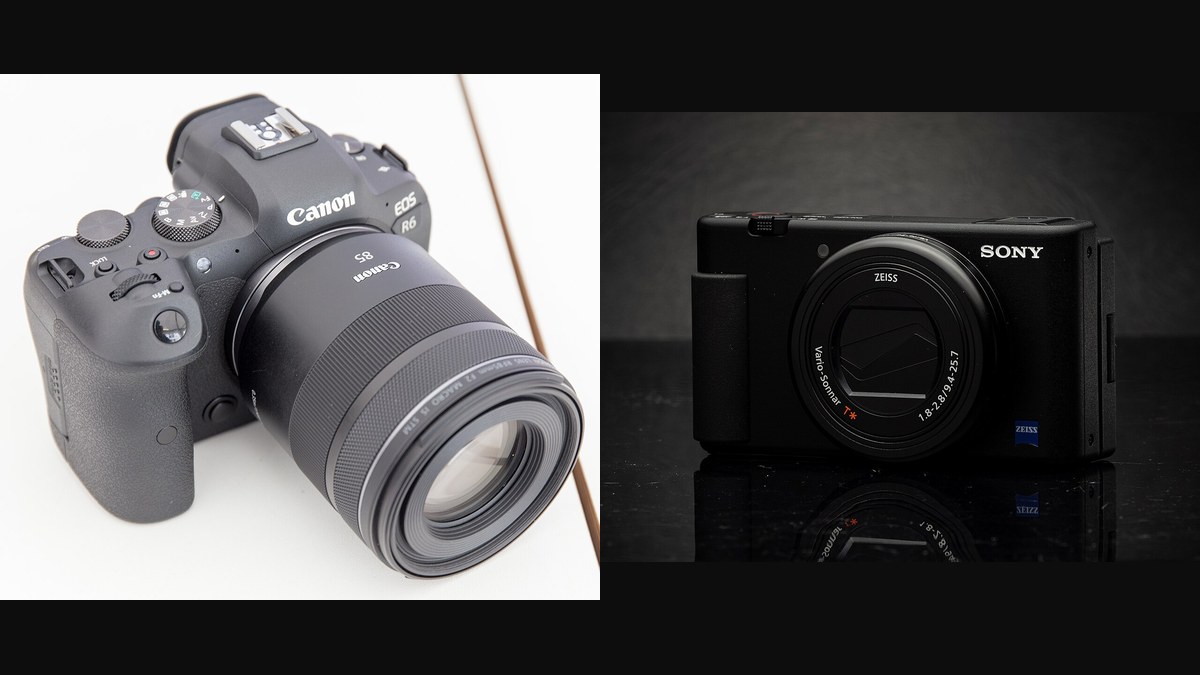
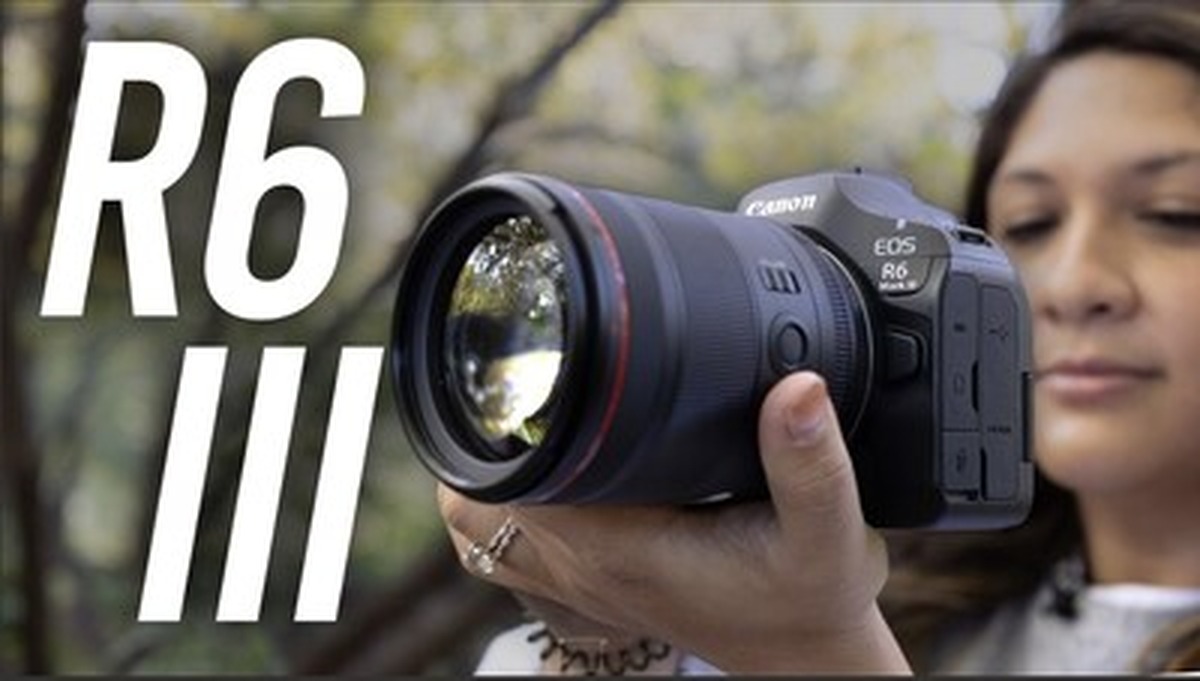
Image: Property of Canon
In This Article
These two cameras already sit in the same cupboard, and they were bought for different jobs. The Canon EOS R6 is the full-frame body that shoots the reviews. The Sony ZV-1 is the small one that goes in a jacket pocket. The question a rider actually asks is narrower than a spec comparison: which of the two earns the space in a tank bag on a ride where you have to carry everything you bring. The answer is not the same as which camera is better, because most of what makes the R6 the better camera stops mattering once the bike is moving.
The two cameras by the numbers
The published specifications do most of the sorting here. Both are 20.1 megapixels. Almost nothing else matches.
| Canon EOS R6 | Sony ZV-1 | |
|---|---|---|
| Sensor | 20.1MP full-frame CMOS (36 x 24mm) | 20.1MP 1.0-type stacked CMOS (13.2 x 8.8mm) |
| Lens | Interchangeable, Canon RF mount | Fixed ZEISS Vario-Sonnar T* 24-70mm f/1.8-2.8 |
| Stabilisation | 5-axis in-body, up to 8 stops | Electronic only, no in-body stabilisation |
| Video ceiling | 4K at up to 60p | 4K at up to 30p |
| Neutral density filter | None built in | Built in, auto or three manual steps |
| Viewfinder | 0.5-inch EVF, 3.69M dots | None, rear screen only |
| Card slots | Two SD slots | One SD slot |
| Body weight | 598 g body only | 294 g with battery and card |
| Dimensions | 138 x 98 x 89 mm | 105.5 x 60 x 43.5 mm |
| Weather sealing | Weatherproof body | Not sealed to the same standard |
The size and weight rows are the ones that survive contact with a motorcycle. The R6 body alone is roughly double the ZV-1's all-in weight, and that is before an RF lens goes on the front. A ZV-1 in a jacket pocket is invisible. An R6 with a zoom on it is a thing you plan around.
Where the sensor gap actually shows up
The full-frame sensor in the R6 is the real reason it wins on image quality, and it wins by a lot in low light. A 36 x 24mm sensor collecting light against a 13.2 x 8.8mm sensor is not a small difference in area, it is a different class of device. The R6's ISO range runs to 102,400 natively and 204,800 expanded. The ZV-1 stops at 12,800.
On a bike, that gap matters in exactly one situation: shade. A tree-lined road in the Cape Breton highlands on an overcast November afternoon is a low-light environment even at noon, and the R6 will hold clean footage where the ZV-1 starts to smear detail. If you ride and film mostly in daylight on open road, the gap narrows enough that you may not care.
The second difference is depth of field. The R6 with a fast lens can throw the background out of focus in a way the ZV-1's small sensor simply cannot replicate, no matter the aperture. For a talking-head shot at a lookout, that is a look some riders want. For footage where you want the road behind you legible, it is a liability you have to stop down to fix.
Stabilisation matters most off the bike
With the camera in your hands rather than on the frame, stabilisation matters less than the internet says, and more than a spec sheet suggests. You are still shooting in wind, often one-handed, sometimes cold, at a look-off where you have thirty seconds before the light changes. That is the test these two have to pass.
The R6 has five-axis in-body stabilisation rated to compensate up to 8 stops, and it works with the lens's own optical stabilisation when a stabilised RF lens is fitted. That is a mechanical system correcting the sensor itself. Hold it in your hands at a look-off and the mechanical stabilisation is doing real work, which is the only reason a 600 g body is shootable without a gimbal.
The ZV-1 has no in-body stabilisation at all. Its stabilisation is electronic: the camera crops into the frame and shifts the image to counter movement. Electronic stabilisation is genuinely useful in your hands, and it struggles with the high-frequency shake of a moving vehicle, because the correction is chasing movement it cannot predict. It also crops, so you lose field of view, and on a 1-inch sensor crop you are throwing away the wide end the lens was bought for.
The honest conclusion: both are hand-held cameras, and neither gets bolted to the bike. The ZV-1 works in a moving vehicle when a person is holding it and their arms are absorbing the bumps. The R6 works the same way, with more weight to hold up and better results to show for it. Anything that has to be filmed while the bike is moving is an action camera job, which is why the X5 and the Ace Pro 2 are on the bike and these two stay in the bag.
Audio and wind, which nobody plans for
Wind noise is the thing that ruins more motorcycle video than any image problem. It arrives as a low rumble that eats the entire soundtrack, and once it is recorded you cannot remove it.
The ZV-1 was designed for this problem. It has a three-capsule directional microphone built into the top plate and ships with a wind screen that slides into the multi-interface shoe. For vlogging at walking pace that system is genuinely good, and it is the reason the camera has the reputation it has.
That design assumption breaks on a motorcycle. The microphone is built into the body, so the body has to be close to your face for the audio to work, and at road speed no amount of wind screening saves an on-camera mic. Both cameras need an external microphone with a dead cat on it for anything above about 60 km/h. The difference is that the R6 has proper microphone and headphone monitoring built into the body, so you can hear what you are recording. The ZV-1 has a microphone input, but no headphone jack, so you are recording blind unless you add an adapter.
For anyone who intends to narrate while riding, that is a bigger practical gap than the sensor size.
Size, packing and the tank bag question
Here is where the ZV-1 claws everything back. A 294 g camera that is 43 mm deep fits in a jacket pocket, a tank bag pocket, or a glovebox. You can carry it and forget it is there. The 24-70mm equivalent range covers wide establishing shots and a tighter frame without changing lenses, which on a bike is the single most useful thing a camera can do, because you are not swapping glass at the side of the road in the rain.
The R6 needs a bag, or a holster, or a strap that puts a 600 g body plus lens swinging against your ribs. Every stop becomes a decision about whether it is worth getting the camera out. In practice, that decision is what determines how much footage you come home with, and the smaller camera wins that contest most days.
Weather sealing is the counter-argument. The R6 is a weatherproof body and the ZV-1 is not sealed to anything like the same standard. Atlantic Canada in November is wet, salt-covered and cold. A camera that lives in a pocket gets rained on. If you plan to keep filming through a wet week, the sealed body is not a luxury.
Battery, cold and charging on the road
The R6 is CIPA rated at about 360 shots on one LP-E6NH charge using the rear screen, and roughly 250 using the EVF. In video terms that translates to well under two hours of continuous recording, and less in the cold.
The ZV-1 runs a much smaller battery in a much smaller body and will not outlast the R6 in continuous recording. Where it wins is the charger: a small USB power bank will top it up while it sits in a pocket or a top box, and the camera is small enough that a power bank plus cable is not an unreasonable thing to carry.
Both cameras lose capacity in the cold, and this is where the honest planning happens. A November ride in New Brunswick at 5 degrees will cut runtime on either camera. The practical answer is the same for both: carry a spare battery inside a jacket pocket where your body heat keeps it warm, and swap before the camera dies rather than after.
The cheap fix that matters more than the camera: keep both spare batteries in an inside pocket. A warm battery at 40 percent outlasts a cold one at 80 percent, and that applies to whichever of these two cameras you carry.
The verdict: pick by how you ride, not by spec
Start with what neither camera is for. Do not mount either one on the bike. A 600 g body and lens on a bar mount is weight and leverage aimed at a vibration source, the lens is not sealed to take road spray at speed, and one pothole is a broken mount and a camera in the ditch. An action camera does that job better, smaller and cheaper.
So the choice is about what you carry and shoot off the bike. If the footage has to hold up, the R6 is the answer and it is not close: in-body stabilisation, a weatherproof body, two card slots and a headphone jack all solve problems a riding day creates. The ZV-1 has none of those, and its electronic stabilisation is a compromise, though a fair one for a camera this small held in two hands.
If the camera is going in a jacket pocket and coming out at stops, the ZV-1 wins on the thing that decides how much you actually shoot. It is small enough to carry without resenting it, the lens range is genuinely useful, and the built-in ND filter means you can hold a sensible shutter angle in bright sun without screwing a filter onto a lens. On a motorcycle, an ND filter is a real convenience, because the alternative is stopping to fit one and then stopping again to take it off.
My own split follows that logic. The R6 does the shots that need to be right: low light, stills, anything I intend to grade. The X5 and the Ace Pro 2 do anything that has to be filmed while the bike is moving. The ZV-1 covers the pocket camera role, which on a ride is most of the incidental footage that ends up being the part people actually watch. Neither replaces the other, and anyone buying one of them to do both jobs will be disappointed by the half it does badly.
If you can only carry one and you ride more than you film, take the small one. You will shoot more, and more footage beats better footage you never recorded.
Frequently Asked Questions
Should you mount a Canon R6 or Sony ZV-1 on a motorcycle?
No. Both are cameras to carry and shoot off the bike. Mounting a 600 g body and lens to a bar or crash bar puts weight and leverage on a vibration source, and neither is built to take road spray at speed. Use an action camera for riding footage.
Does the Canon EOS R6 record 4K at 60 frames per second?
Yes. The EOS R6 records 4K UHD at up to 60p, and 1080p at up to 120p.
Which camera is better for low light on a bike?
The Canon EOS R6. Its full-frame 36 x 24mm sensor against the ZV-1 1.0-type 13.2 x 8.8mm sensor is a much larger light-collecting area, and the R6 sensitivity range extends to ISO 102,400 natively where the ZV-1 stops at ISO 12,800.
Does the ZV-1 have a headphone jack?
No. The ZV-1 has a microphone input but no headphone jack, so monitoring audio while recording requires an adapter. The EOS R6 has both microphone and headphone connections in the body.
What is the weight difference?
The Sony ZV-1 is about 294 g including battery and card. The Canon EOS R6 body alone is 598 g, before any lens is fitted.
Sources
- Canon EOS R6 specifications. Sensor, stabilisation rating, video modes, card slots, dimensions and body weight.
- Sony ZV-1 specifications. Sensor size, lens range, dimensions and 294 g weight with battery and card.
- Sony ZV-1 product page. Built-in ND filter, directional microphone and wind screen.
- Canon EOS R6 support article. Confirming in-body image stabilisation and 4K video capability.